
Why the Bride Cries at Kina Gecesi and How to Handle the Emotional Moment
A bride may cry at kına gecesi because the evening brings farewell, family attachment, childhood memories, and a visible change in her household life together. Songs about leaving home or missing parents can make those feelings immediate, while the ceremony gives relatives a shared setting for public emotion.
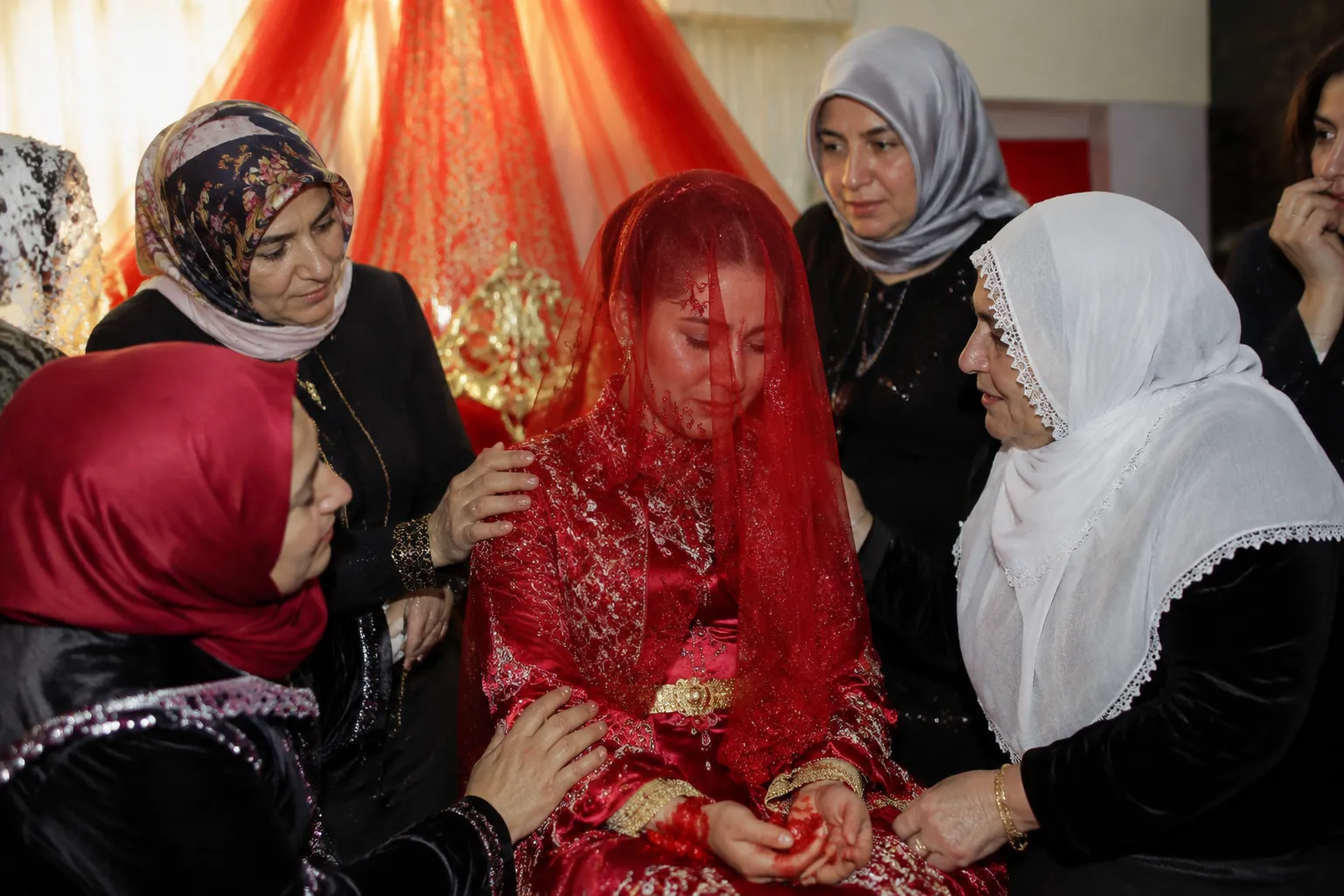
That reaction is common in some traditional formats, but it is never required. A bride may cry, laugh, feel conflicted, or remain composed. None of these responses proves her love, respect, family loyalty, happiness, or readiness for marriage.
Why Does the Bride Cry at Kına Gecesi?
Kına gecesi is often described as a pre-wedding gathering connected with saying farewell to the bride's family home. The emotional focus may fall on her relationship with parents, relatives, friends, and the place where she grew up.
Marriage can change a bride's social setting and may involve moving into another household. Even when the couple is happy and the new home is nearby, the evening can make separation from a familiar family setting feel more present. The ceremony therefore combines celebration with a sense of transition.
The emotional moment may become stronger when close relatives gather around the bride, a farewell song mentions parents or home, or a senior relative sings, embraces her, or applies the henna. Travel, family reunions, ceremonial clothing, and memories of earlier gatherings can add to the atmosphere.
These details create a setting for emotion, rather than a guaranteed reaction. Personal history and family expectations still shape how the bride experiences the evening.
The Farewell to the Family Home
Farewell is a recurring explanation in cultural accounts of kına gecesi. Older or more traditional descriptions may present the night as a final important celebration in the parental home before marriage, although that sequence does not apply to every family or venue.
Farewell songs can express distance, longing, advice, warning, reproach, or uncertainty. Their meaning is broader than simple sadness. References to a mother, a village, a road, or a childhood home may connect the song with the bride's own memories.
Research on regional henna-night songs describes these songs as carriers of cultural memory. A familiar place or repeated line can make the ceremony feel personal, even when the song was not written for that bride's circumstances.
For this reason, tears may arrive unexpectedly. Music, family presence, repeated words, and the awareness that a familiar stage of life is changing can work together in one public moment.
How the Songs Intensify the Moment
A common pattern begins with music, dancing, and conversation. Later, the atmosphere may become quieter as the henna is prepared and a farewell song is performed.
Yüksek Yüksek Tepelere is frequently associated with separation from family and home. Other songs may describe a daughter leaving, missing her family, or receiving advice before marriage. The song, language, performer, and timing vary by family and community.
- They name the separation. Words about leaving parents or returning to a distant home make the change more explicit.
- They activate memory. Familiar images can connect the ceremony with the bride's childhood, family home, and earlier gatherings.
In some settings, people describe the purpose as “making the bride cry.” That phrase records a ceremony-specific expectation in some accounts; it should not become an instruction to pressure the bride. The emotional meaning of the song does not depend on producing tears.
Is Crying Mandatory at Kına Gecesi?
No. Crying is not mandatory at kına gecesi.
Some traditional accounts describe tears as expected or socially meaningful. A bride who remains composed may attract comments when relatives are following an older ceremony script. Other women have laughed, resisted the expectation, or treated one tear as enough.
A bride may not cry because she feels happy, has processed the change privately, dislikes public displays of emotion, or is concentrating on a busy event. She may also be attending a shortened, mixed, secular, or diaspora celebration that uses only selected parts of the farewell tradition.
Her reaction should not be used as a test. Tears do not show that she cares more, and composure does not show that she cares less.
What Usually Happens Around the Emotional Moment?
The sequence varies, but a commonly described pattern may include:
- Guests arrive, sing, dance, and spend time together.
- The mood shifts toward the henna portion of the evening.
- A farewell song or more solemn piece is performed.
- The bride sits or stands in a central position while relatives gather around her.
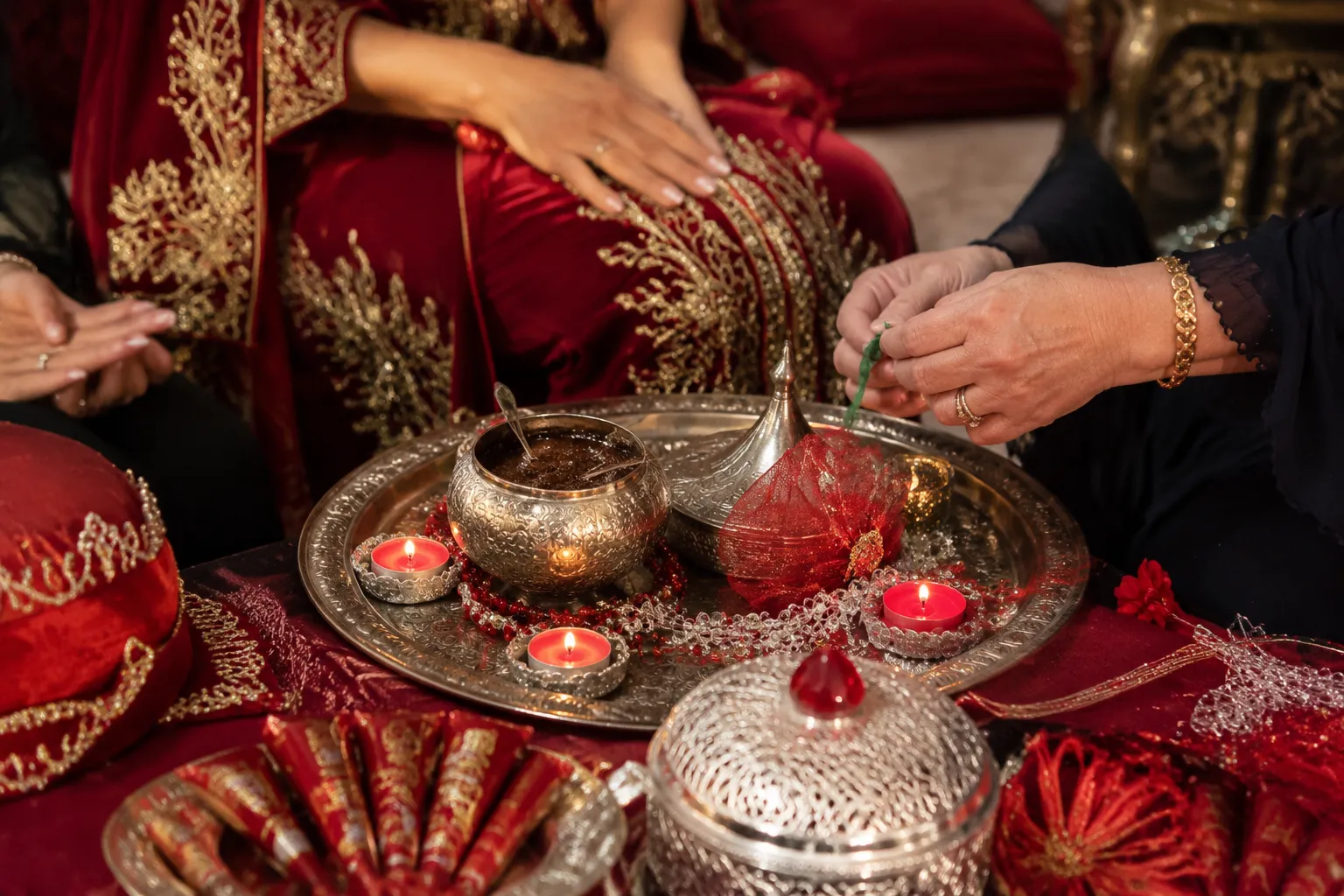
- Henna is placed in her palm, sometimes after a gold coin is offered.
- Her hands may be covered or wrapped for a period of time.
- The celebration continues with music, dancing, food, or conversation.
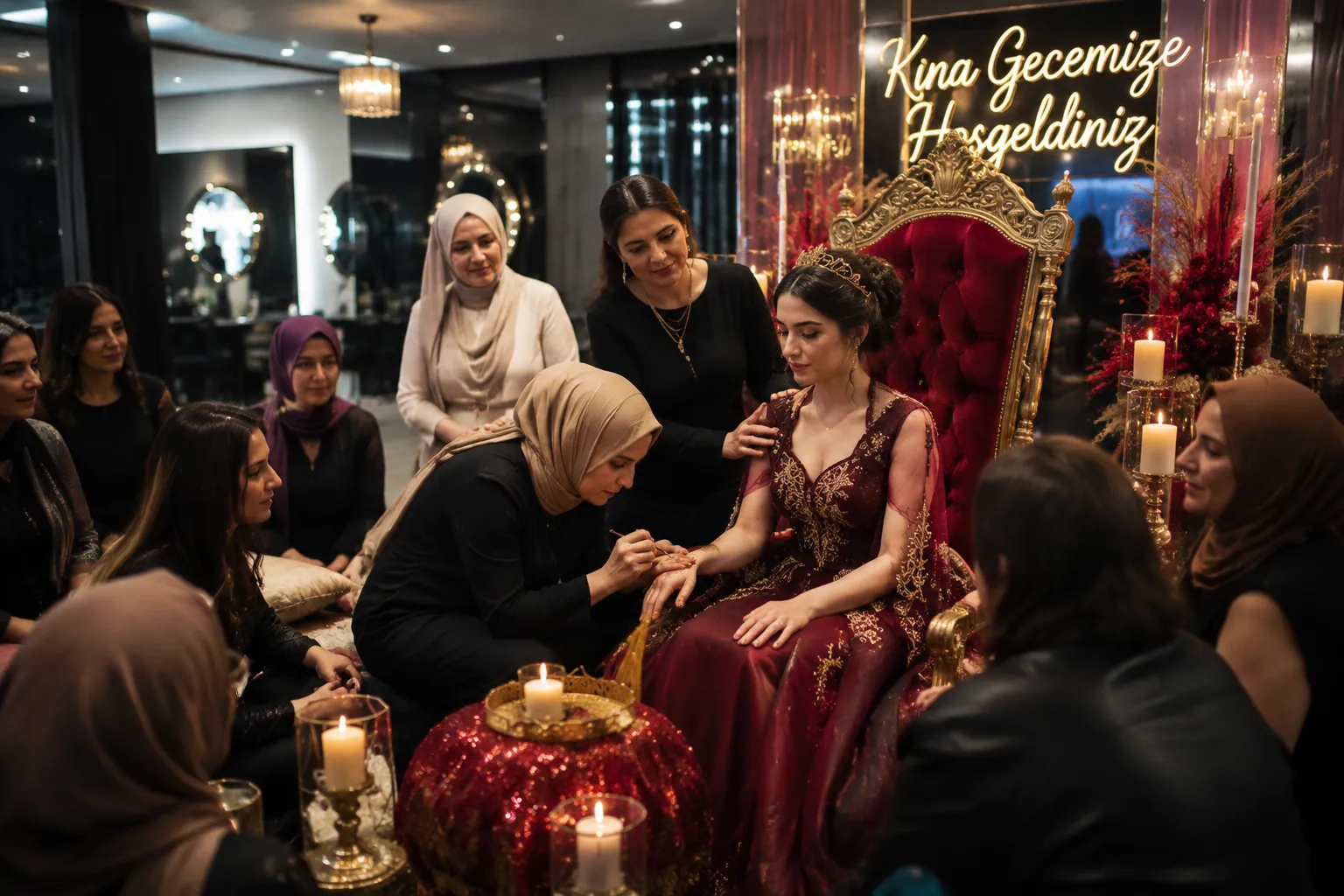
Some celebrations include candles, a henna tray, red clothing, a bindalli, or a veil. Others use only a few of these elements. The mother-in-law, an aunt, the bride's mother, or another senior relative may take part, depending on family preference.
A salon program may stage the sequence for guests, while a home gathering may keep it more intimate. Diaspora couples may combine elements from several family backgrounds or omit the farewell portion. Confirm the preferred order with the couple and family before the event.
Who Leads the Henna Ceremony?
There is no single person who leads every kına gecesi. The role may belong to the bride's mother, a mother-in-law, an aunt, another senior relative, a close friend, or a group chosen by the couple.
In some family versions, the groom's side brings the henna or presents the gold coin. In others, the bride's side organizes most of the evening. At a salon wedding, venue staff, musicians, or an event host may guide the public sequence.
Ask the bride whom she wants beside her. Do not assume that the oldest relative, the groom's family, or a particular married woman should perform the henna ritual.
How to Support an Emotional Bride
Support means allowing emotion without turning it into a performance she cannot leave. A short conversation before the henna night can settle the most important choices.
- Ask privately whether she wants the farewell-song portion.
- Confirm which songs she is comfortable hearing.
- Agree on who may apply the henna.
- Choose one trusted person to check on her during the ceremony.
- Arrange a quiet place and time for a short pause.
- Tell the musicians or host how to stop, shorten, or change the sequence.
- Give her space if she becomes overwhelmed.
- Continue only when she is ready.
A quiet question such as “Would you like a pause?” is usually more useful than telling her to calm down or insisting that she smile for photographs.
What Friends and Relatives Should Avoid
The phrase “make the bride cry” can lead guests to treat tears as the objective of the evening. That can turn a meaningful custom into unwanted pressure.
- Do not pinch, tease, or startle the bride to force tears.
- Do not repeat that she is expected to cry.
- Do not compare her reaction with another bride's.
- Do not suggest that composure means she does not love her family.
- Do not continue a song after she asks for it to stop.
- Do not photograph or share an intimate moment without permission.
- Do not treat visible distress as entertainment.
Some ethnographic accounts record teasing or physical prompting in particular settings. Describing that practice does not make it suitable for every celebration. The bride's consent should determine whether any playful interaction is welcome.
What Do Henna and Gold Add to the Moment?
Henna gives the ceremony its name and can serve as the visible transition within the evening. The emotional weight usually comes from the surrounding farewell, music, and family attention rather than from the material alone.
In some accounts, the bride keeps her palm closed while the henna is applied, and a gold coin is offered to encourage her to open it. Gold may function as a gift or welcome gesture, with its meaning and form varying among families.
Public explanations sometimes connect henna, gold, red clothing, or other elements with luck, protection, prosperity, or transition. These are attributed cultural interpretations, not established outcomes. The bride's own understanding should remain more important than a symbolic explanation imposed by guests.
How Modern Kına Gecesi Celebrations Differ
Kına gecesi has changed in many communities as celebrations have moved from family homes to salons and larger venues. Some families use a shorter staged program, while others retain the songs and henna but change the order.
- A joint event for both families.
- A separate gathering for the groom.
- A mixed-gender guest list.
- A brief henna segment within a larger reception.
- A home gathering with only close relatives.
- A secular interpretation centered on music and family.
- A diaspora format combining Turkish customs with local wedding practices.
The same song or gesture may feel deeply traditional in one family and mainly ceremonial in another. The setting does not determine how the bride should react.
A Simple Plan for the Emotional Part
Before the henna night, the couple and planner can agree on five points:
- Desired tone: solemn, festive, mixed, or brief.
- Farewell song: included, replaced, shortened, or omitted.
- Participants: family members, friends, mixed guests, or a smaller group.
- Henna leader: one named person rather than an uncertain handover.
- Pause signal: a clear way for the bride to stop or change the sequence.
This keeps the family custom recognizable without making tears the measure of success. It also gives musicians, photographers, and venue staff a practical response if the bride needs privacy.
The Main Point
The bride may cry at kına gecesi because the ceremony makes farewell tangible. Songs, family memories, the parental home, and a new stage of life can create a genuinely bittersweet moment.
Crying is not compulsory, and it is not evidence of a bride's character or feelings. Preserve the parts of the kına gecesi she wants, explain family expectations clearly, and let her decide how much emotion becomes part of the public ceremony.
Sources
- 'Mother Bring the Henna': Kına Gecesi and Fragmented Imaginations of the Nation-state
- KARAMAN SARIVELİLER YÖRESİNDE KINA AĞITLARI VE GELİN OKŞAMA
- GEÇİŞ RİTÜELLERİNDE AĞLAMA EYLEMİNİN TOPLUMSAL VE SİMGESEL İŞLEVİ
- Cultural Codes of Marriage Rituals in Anatolia: From Ritual to Word in the Context of Oral Culture
- Kınanın Gizli Özneleri: Sağlık Söylemleri Altında Yatan Duyuların Belleği
- Gelinin Otobiyografik Belleği Bağlamında Kına Türkülerinde Hafıza, Mekân ve Geçmiş
- The Change in Erzincan Wedding Traditions
- GEÇMİŞTEN GÜNÜMÜZE MAKEDONYA TÜRKLERİNİN EVLENME DÜĞÜN GELENEKLERİ