
Why Does the Bride Cry at a Turkish Henna Night?
As the music slows and the henna ritual begins, a bride may cry because the ceremony gives farewell, family memories, and a major life change a public moment. The songs often turn attention toward her parental home, her mother, and the life she is leaving behind or changing.
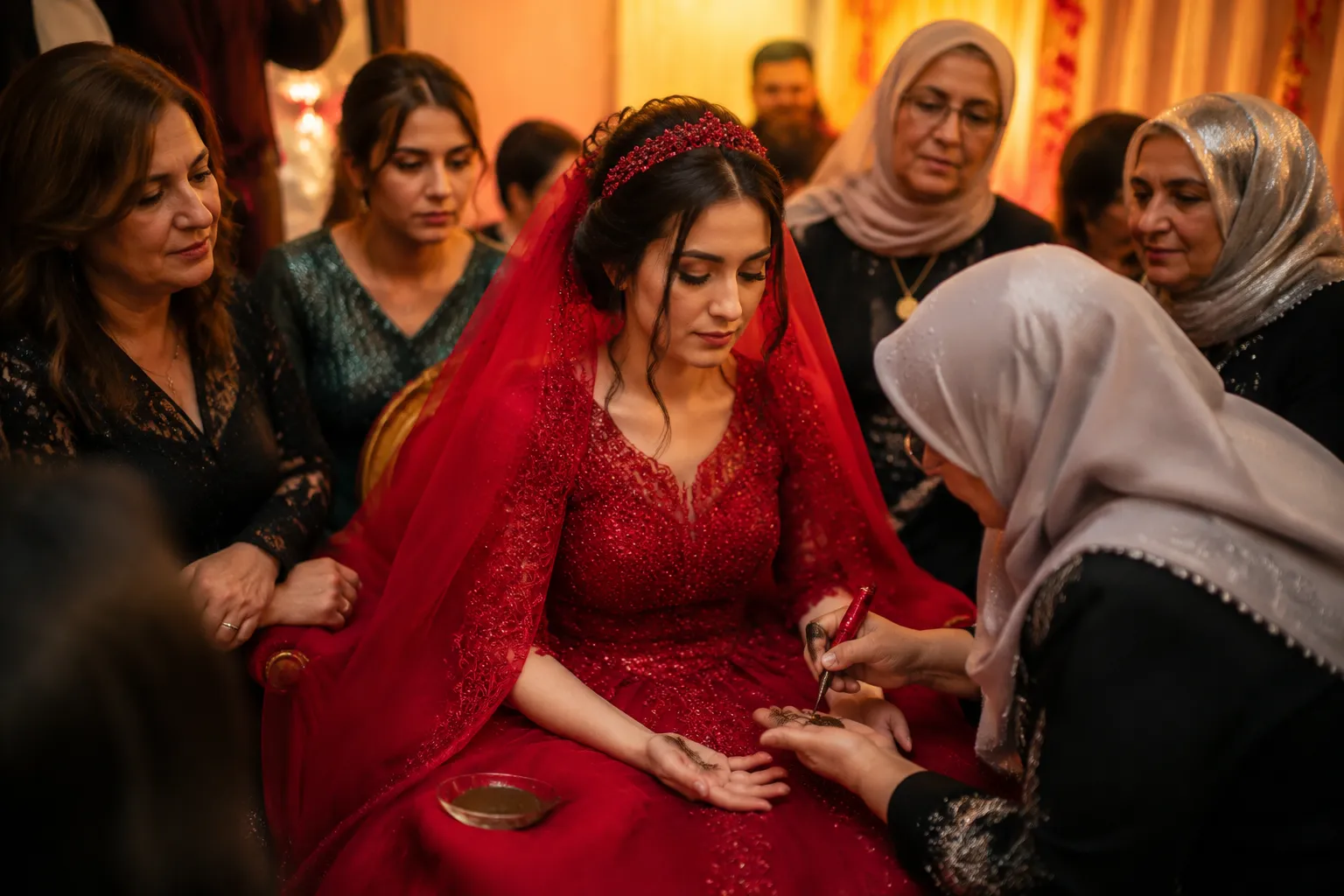
These tears do not necessarily show regret or reluctance. Happiness about the marriage can exist alongside sadness, nostalgia, and uncertainty about a new family role. A bride may cry, laugh, remain composed, or move between several emotions. None of these reactions proves how she feels about her family or marriage.
What Happens During the Emotional Part?
A Turkish henna night, or kına gecesi, may combine dancing and lively music with a quieter farewell phase. The exact flow varies, but one commonly documented pattern looks like this:
- Guests gather for conversation, music, and dancing.
- The pace changes as farewell songs and the henna ritual begin.
- The bride sits while women or other invited participants sing about separation, longing, family, or the childhood home.
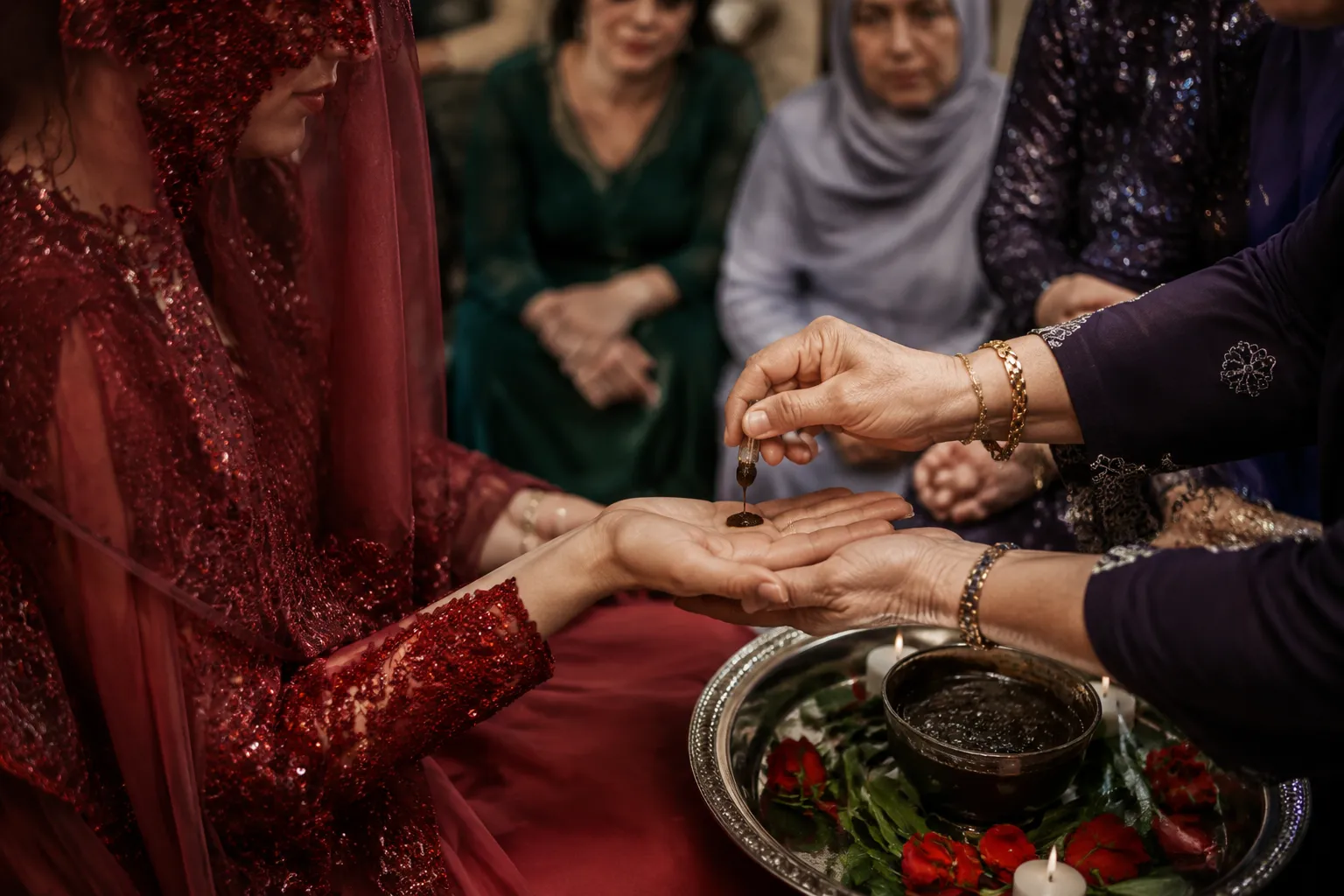
- Henna is placed in the bride’s palm in a form chosen by the family or venue.
- The gathering returns to music, dancing, and celebration.
This is a broad pattern, not a fixed national sequence. A family may shorten the solemn section, rearrange it, adapt it for a salon reception, or leave it out. A small home gathering may give the songs more time, while a large event may treat the henna moment as a short presentation.
The change in pace helps explain the tears. Focused attention, slower music, familiar lyrics, and the sight of henna being placed in the bride’s palm can bring feelings that stayed in the background during wedding preparations into the open.
Why Can the Farewell Songs Bring Tears?
Henna-night songs often refer to a daughter leaving her family, missing her mother, travelling away, or moving into an unfamiliar stage of life. Their images may also recall the house where she grew up, nearby landscapes, and relatives connected with those memories.
Folklore and field research from selected communities in Türkiye describes themes of separation, longing, advice, and change in henna songs and wedding laments. The songs give relatives a shared way to acknowledge the transition. They do not create one identical feeling for every bride.
Older relatives may also connect a familiar song with their own wedding memories. That can make the farewell collective: the bride’s mother, aunts, sisters, friends, or other guests may become emotional at the same time. The response belongs to each person, however, and no particular relative has a required part.
Yüksek Yüksek Tepelere is often discussed as an example associated with distance and longing for home. Its presence should not be assumed at every henna night. Families choose different songs, and there is no single farewell song that every celebration must include.
Is the Bride Saying Goodbye to Her Family?
In many versions of the ceremony, the bride’s farewell to family is symbolic as well as practical. Marriage may once have involved leaving the parental household and joining another home or family structure. The henna night gave that change a visible form.
Modern circumstances can look very different. A bride may already live independently, share a home with her partner, or remain close to her parents. The emotional meaning can still concern a change in family role, routines, and expectations rather than a permanent physical departure.
The parental home may represent daily contact, childhood habits, familiar streets, and a settled sense of belonging. A song about leaving can bring those associations forward even when the bride expects to visit her family regularly.
For diaspora couples, the ceremony may connect relatives across countries and generations. Some families preserve the solemn songs, while others focus on dancing, explain the lyrics for guests, or combine elements from more than one family tradition.
Why Might the Bride and Her Mother Cry Together?
The mother-daughter relationship is a common emotional focus in accounts of henna songs and ceremonies. The wedding changes the mother’s routines and expectations as well as the bride’s, even though their relationship continues.
During the quieter portion of the night, attention may turn to the bride’s upbringing and the mother’s place in it. A familiar lyric, an embrace, or the henna ritual itself can make that change feel immediate.
This does not give the mother a fixed role. A father, sibling, grandmother, friend, or member of the groom’s family may also become emotional, depending on who attends and how the event is arranged.
Are Tears Expected at a Turkish Henna Night?
In some communities, visible emotion has been treated as part of the farewell scene. Ethnographic accounts describe an expectation that the songs may bring tears, which helps explain why people sometimes say that the ceremony is meant to “make the bride cry.”
Expectation is not obligation. Tears are not evidence of sincerity, family loyalty, consent, happiness, or unhappiness. A bride who laughs or stays composed is not showing less respect for her family.
Relatives and friends should not pressure, shame, pinch, or otherwise distress the bride to produce a reaction. The farewell meaning can remain present without asking her to perform emotion. Guests can follow the family’s tone, stay quiet during the solemn music, offer comfort if it is welcome, and avoid comments about whether she cried enough.
Why Does the Night Return to Celebration?
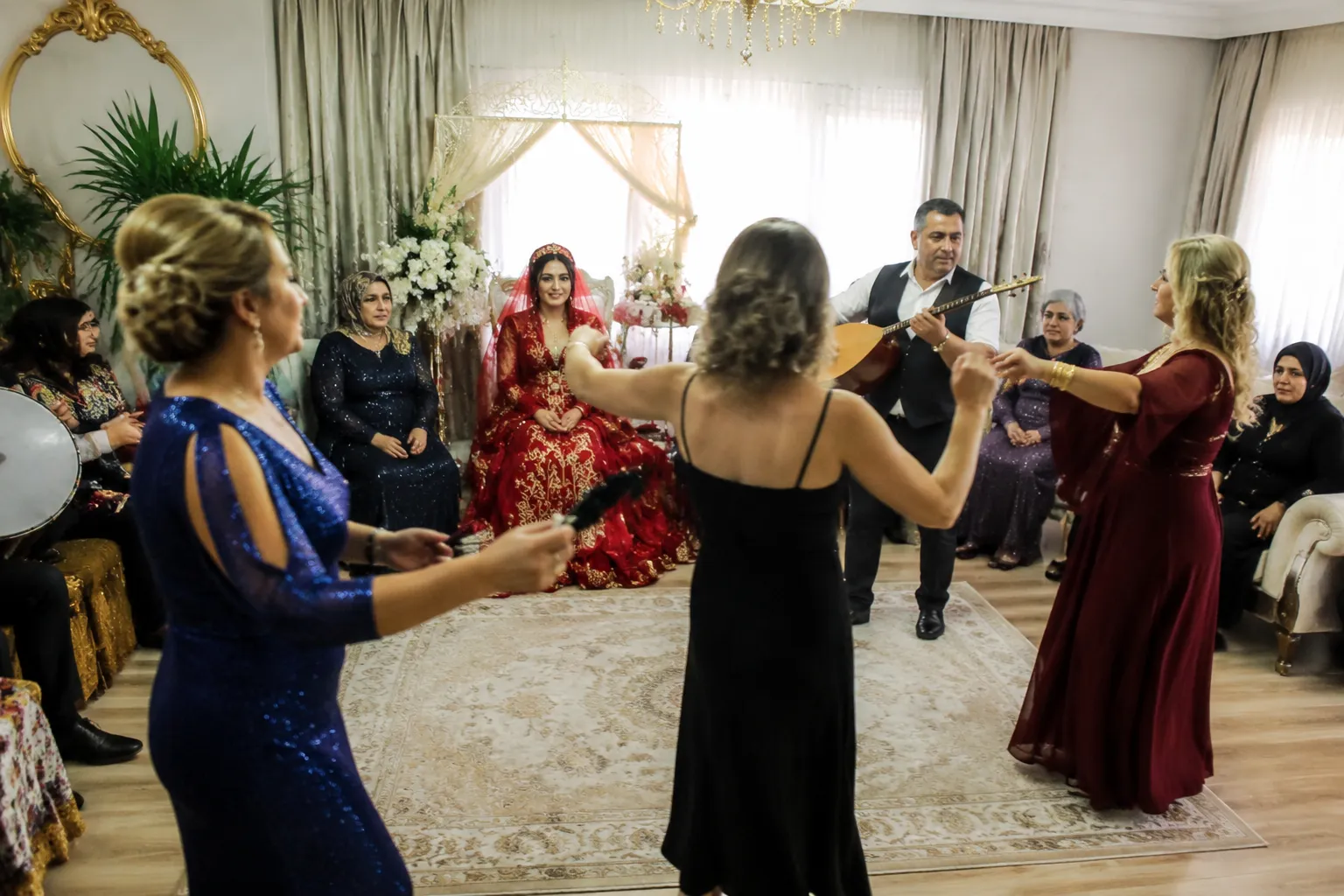
The emotional interval is usually one part of the wider gathering. Henna-night performances may move from lively music into a concentrated farewell and then back to dancing and social celebration.
That movement allows sadness and happiness to share the same ceremony. A bride may cry during a song, laugh with a relative soon afterward, and join her friends on the dance floor. Mixed emotions are ordinary possibilities during a significant family transition.
How Much Do Henna-Night Practices Vary?
Turkish henna-night practices vary by family, region, generation, venue, religious or secular preference, and diaspora setting. Village weddings, home gatherings, and salon receptions may give the henna phase different timing and emphasis.
Details such as who applies the henna, what the bride wears, whether candles or prayers appear, and whether a gift is placed in her palm belong to particular versions of the ceremony. They should not be treated as requirements for every family.
The available research covers selected communities and performances, including work connected with Ankara, Edirne, Karaman, and the Sivas Şarkışla Emlek region. It supports the broad themes of farewell, memory, emotional intensity, and variation, but it does not describe every bride in Türkiye or the diaspora.
The clearest answer is therefore qualified: a bride may cry because the henna night turns separation, memory, and transition into a shared ceremonial moment. She may also feel joyful, remain calm, or choose not to follow that emotional script. Before the event, confirm the family’s preferred songs, roles, and ceremony flow with the couple and venue.
Sources
- 'Mother Bring the Henna': Kına Gecesi and Fragmented Imaginations of the Nation-state
- Cultural Codes of Marriage Rituals in Anatolia: From Ritual to Word in the Context of Oral Culture
- KARAMAN SARIVELİLER YÖRESİNDE KINA AĞITLARI VE GELİN OKŞAMA
- Consuming Ritual: Reframing the Turkish Henna-Night Ceremony
- Dance and Identity Construction in Political Rhythms in Political Rhythms in Prefecture of Edirne, Turkey
- THE EFFECTS OF MODERN POLITICAL MOVEMENTS ON CULTURAL IDENTITY: THE CASE OF RITES OF PASSAGE IN TÜRKİYE
- KINA GECESİ RİTÜELİNDE ANLAMSAL İŞLEYİŞ: ÇAĞRIŞIMLAR, DÜŞÜNYAPILAR, DÖNÜŞÜMLER
- Gelinin Otobiyografik Belleği Bağlamında Kına Türkülerinde Hafıza, Mekân ve Geçmiş