
Who Puts Henna on the Bride at a Kina Gecesi?
At a kina gecesi, the bride or her family commonly chooses who will apply the henna. In documented traditional versions, the role often belongs to a meaningful female relative from the groom’s side, especially the groom’s mother, who may later be the bride’s mother-in-law.
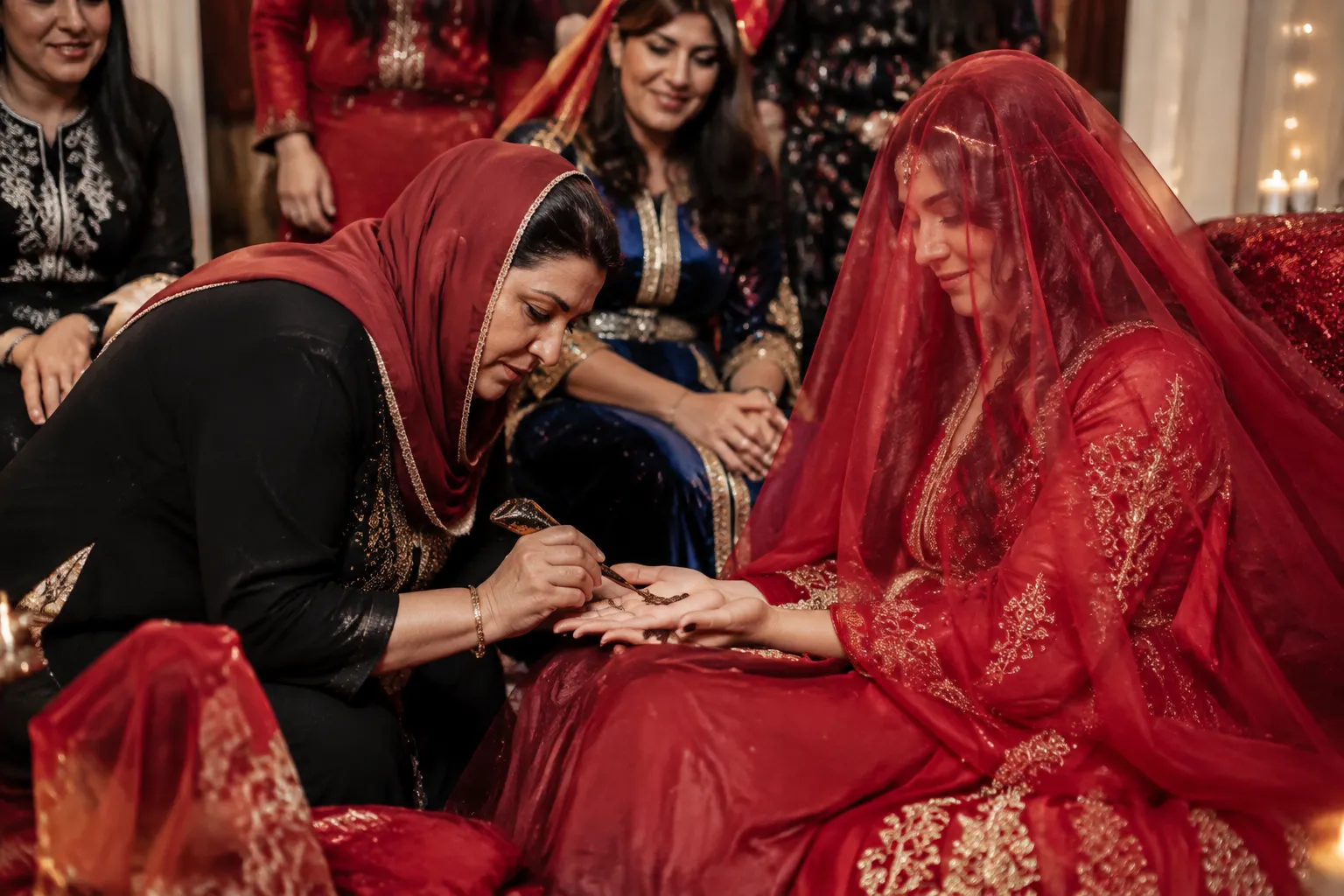
That pattern is not a universal rule for Turkish weddings. A bride-side relative, older woman, sister, close friend, or person arranged through the venue or henna provider may lead the application instead. Family custom, regional practice, religious or secular preferences, and the event setting can all change the ceremony flow.
The useful planning answer is to confirm the person with the bride and both families before the henna night, then coordinate the timing with the venue or henna provider.
The Traditional Role of the Groom’s Female Relative
Some ethnographic accounts describe henna being brought to the bride by female relatives from the groom’s side. In one commonly documented pattern, the groom’s mother approaches the bride with the henna and applies it to her palm.
The gathering may take place among women at the bride’s family home before the wedding. The bride may enter in red clothing or beneath a red veil, while relatives and friends carry candles, sing, offer spoken wishes, or accompany her around the room. These details belong to particular traditional versions and may be shortened or omitted at a modern celebration.
In this setting, the applicator’s role connects the bride’s henna with the family she is joining. It is therefore more than a routine beauty service, although the same gesture can be presented more simply at a contemporary venue.
How the Henna Application May Unfold
A documented traditional sequence can follow this general order:
- The henna is brought into the gathering on a decorated tray or in a ceremonial bowl.
- The bride is seated while songs, prayers, or spoken wishes continue.
- The selected woman approaches and places henna in or near the bride’s palm.
- The bride keeps her hand closed or does not immediately accept the henna.
- A gold coin is placed in her hand.
- She opens her palm, and the henna application continues.
- Henna may then be offered to other guests.
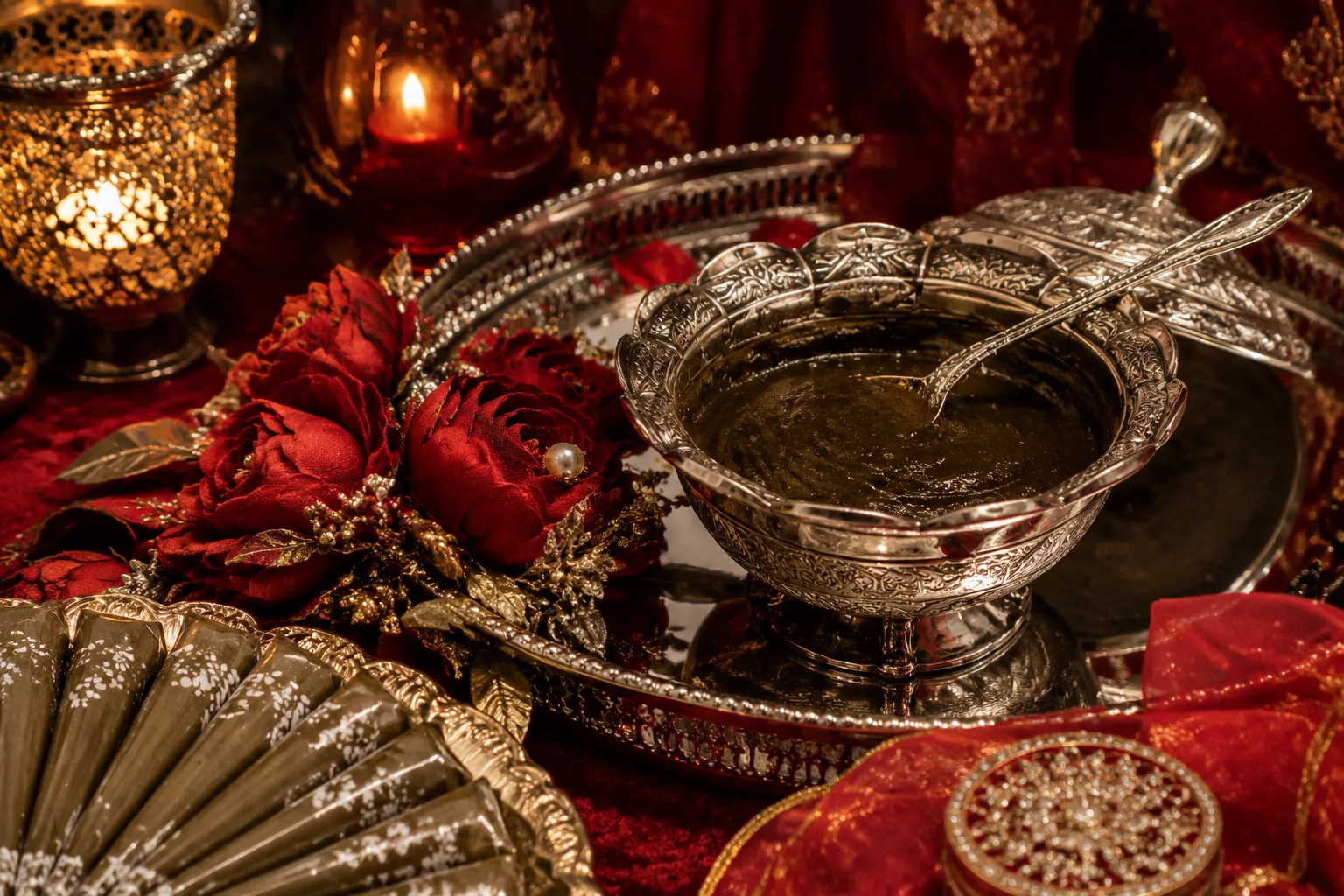
The closed-hand gesture and gold coin are part of specific documented traditions. They are not required etiquette for every kina gecesi. Some couples keep the full sequence, while others shorten it or leave it out.
Venue flow can also change the order. At a salon reception, the application may become a short stage moment before dancing. At a home or village celebration, it may remain part of a longer gathering with relatives, neighbors, music, food, and farewell songs.
Does the Bride’s Mother Apply the Henna?
The bride’s mother may host or organize much of the evening, but the available research does not establish her as the single customary applicator across Turkish families.
In some traditional descriptions, the bride’s mother helps prepare the gathering while a female relative from the groom’s side applies the henna. Other regional accounts describe a woman from the bride’s family applying henna to the bride’s fingers or hand.
This distinction matters during planning. Relatives should not assume that the bride’s mother, the groom’s mother, or another elder automatically has the role. The choice may carry personal and family meaning, so it is better discussed directly with the bride and the relatives involved.
Who Applies Henna at a Modern Kina Gecesi?
Contemporary celebrations often adapt the older sequence to the couple’s preferences and the event format. The bride may choose:
- A female relative from the groom’s side
- A female relative from the bride’s side
- A mother, aunt, grandmother, or another elder
- A sister or close friend
- A guest with an important family connection
- A person working with the henna provider or venue
These are planning possibilities, not nationwide rules. The available material does not confirm one fixed role for each relationship.
The bride may also apply the henna herself, ask both families to choose together, or include more than one person. A secular celebration may retain the tray, music, candles, and hand application while leaving out prayers or other religious elements. A religious family may give more space to blessings or prayer.
It helps to separate the symbolic role from the practical task. One person may lead the application, while another prepares the henna, carries the tray, manages the candles, or helps with the bride’s hands afterward.
Regional and Diaspora Variations
Research from different Turkish regions and communities describes variation in the number of nights, venue, guest list, songs, candle use, and the person who applies the henna.
For example, one regional account from Thrace describes a woman from the bride’s family applying the henna. Other accounts describe the groom’s mother or another female relative from his side carrying out the role. These examples show why one family pattern should not be presented as the answer for every kina gecesi.
Diaspora celebrations may combine inherited family customs with the structure of a modern reception. A Turkish-German wedding might include traditional clothing, a henna tray, prayers, or a staged ceremony alongside a contemporary venue and a broader guest list. The applicator may therefore be selected through family discussion rather than inherited through one fixed script.
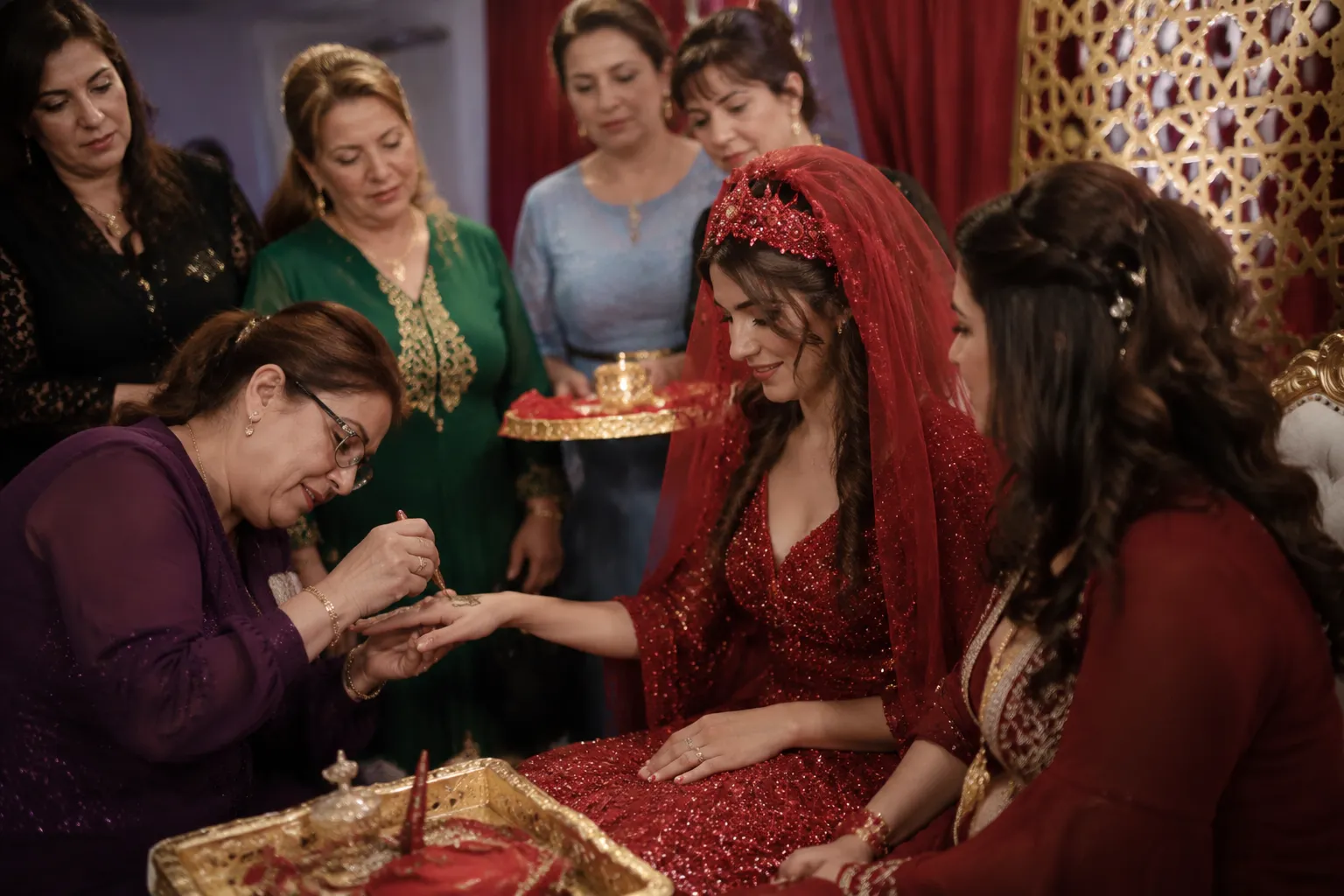
Ask which version the family recognizes before making arrangements. A custom familiar to one side may be unfamiliar to the other.
What to Confirm Before the Henna Night
- The applicator: Ask the bride who she wants to perform the hand application.
- The family connection: Clarify whether the choice reflects the groom’s side, the bride’s side, or a personal relationship.
- The sequence: Decide whether the closed-hand gesture and gold coin will be included.
- The venue timing: Tell the venue or henna provider when the moment will happen and who will lead it.
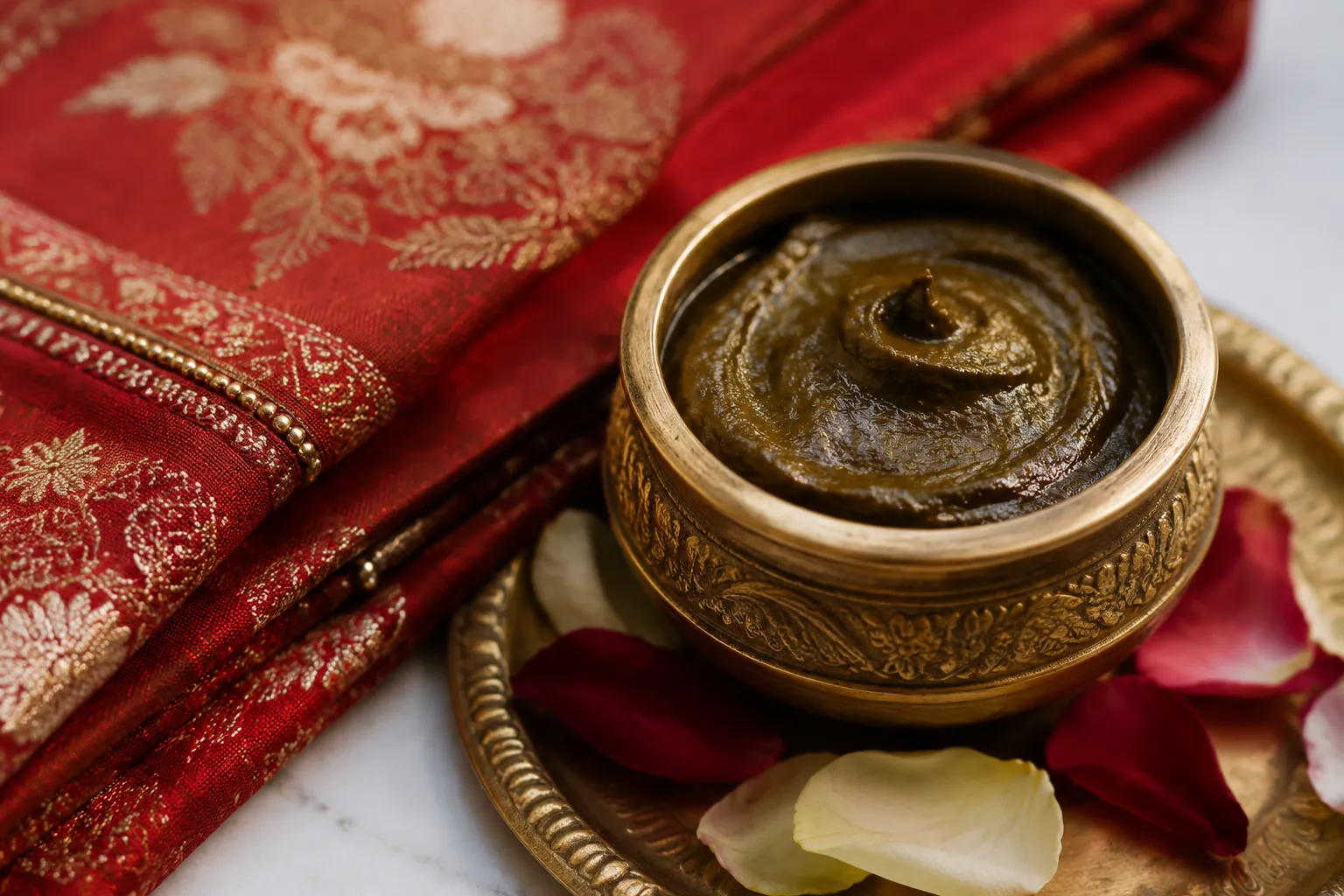
- The material: Confirm whether the product is traditional henna or one marketed as black henna.
The last point concerns the material, not the applicator’s role. Government consumer-safety information distinguishes traditional henna from products marketed as black henna and notes that some products have been associated with skin reactions. This is a general planning boundary, not an individualized health assessment.
A Respectful Way to Ask
“Who would you like to apply the henna, and should we include the gold-coin hand-opening part of the ceremony?”
This wording keeps the bride’s preference at the center while giving both families room to explain their expectations. It also gives the venue a clear instruction without presenting one family custom as a universal requirement.
The Short Answer
In some traditional kina gecesi ceremonies, a female relative from the groom’s side, often the groom’s mother, applies the bride’s henna. In other families and regions, a woman from the bride’s side, an elder, friend, or selected guest performs the role.
For a contemporary celebration, the bride and family can choose the person together. Confirm the applicator, the hand-closing and gold-coin sequence, the product, and the venue timing before the ceremony.
Sources
- Consuming Ritual: Reframing the Turkish Henna-Night Ceremony
- 'Mother Bring the Henna': Kına Gecesi and Fragmented Imaginations of the Nation-state
- ÇANKIRI'NIN KIZILIRMAK İLÇESİNDE “KINA GECESİ” VE “GELİN ALMA” GELENEĞİ ÜZERİNE
- The Construction of National Identity through Cybernetic Process: The Example of “K’na” Dance Event in Greek and Turkish Thrace
- Cultural Codes of Marriage Rituals in Anatolia: From Ritual to Word in the Context of Oral Culture
- Home Beyond Borders: Turkish Wedding Ceremonies as the Embodied Extension of Diasporic Space in German-Turkish Context
- Henna: rituals, aesthetic and social practices
- Temporary Tattoos, Henna/Mehndi, and 'Black Henna': Fact Sheet