
Traditional vs Modern Kina Gecesi Ceremony Ideas
When families compare traditional and modern kina gecesi ideas, the practical choice is usually about ceremony flow, participation, and atmosphere. A traditional-leaning evening may center family memory, farewell songs, henna application, and older relatives. A modern format may move those moments into a salon or restaurant with scheduled music, coordinated decoration, outfit changes, and broader guest participation.
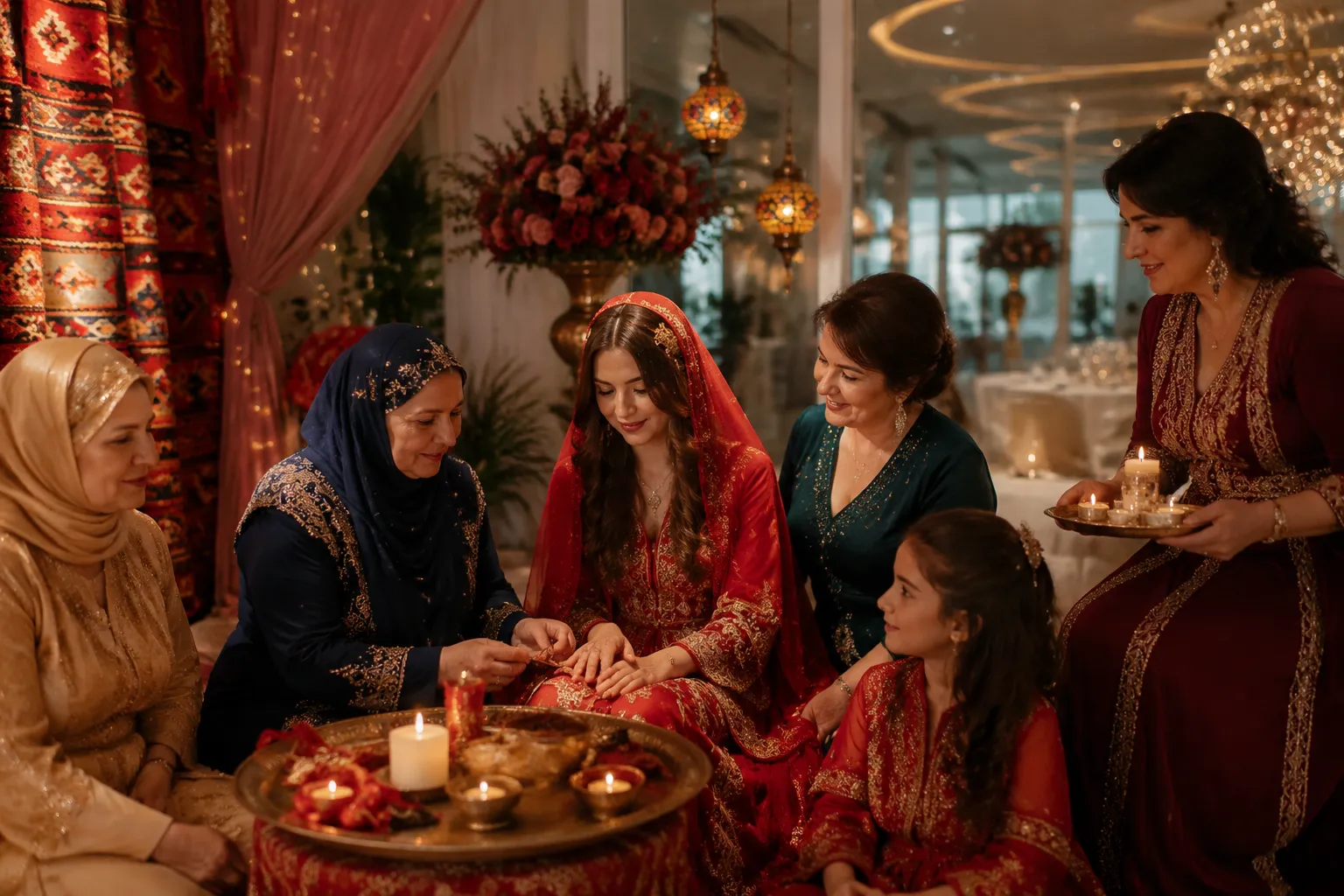
The choice does not have to be between “authentic” and “inauthentic.” Couples can keep the moments that matter to their family, then choose a venue and schedule that support them. Practices vary with region, family history, religious or secular preference, social setting, and diaspora experience.
Traditional Kina Gecesi Ideas
A traditional-leaning kina gecesi is often remembered as a farewell gathering before the wedding. In some families, the emotional focus is the bride’s departure from her parents’ home and her transition into married life. Women relatives, friends, neighbors, and members of both family sides may have important roles, although participation differs considerably.
Possible elements include:
- A family-led gathering at home, in a courtyard, or in a neighborhood or village setting
- Henna prepared and applied during a defined part of the evening
- Songs, folk music, dances, games, or spoken verses linked with farewell
- Older women guiding the ceremony or offering wishes
- Close relatives helping with clothing, seating, food, henna, and guest welcoming
- A sequence shaped by family memory and local custom rather than a fixed event package
Traditional does not necessarily mean small or informal. A family may preserve farewell songs and the henna moment while inviting a large group. Another may keep the central ceremony women-centered, while a different family includes men and children from the beginning.
Regional studies also describe differences in duration, songs, roles, and ceremony structure, including gatherings divided across more than one night. These examples are useful for understanding variation, but they should not be treated as a single model for every Turkish wedding.
Modern Kina Gecesi Ideas
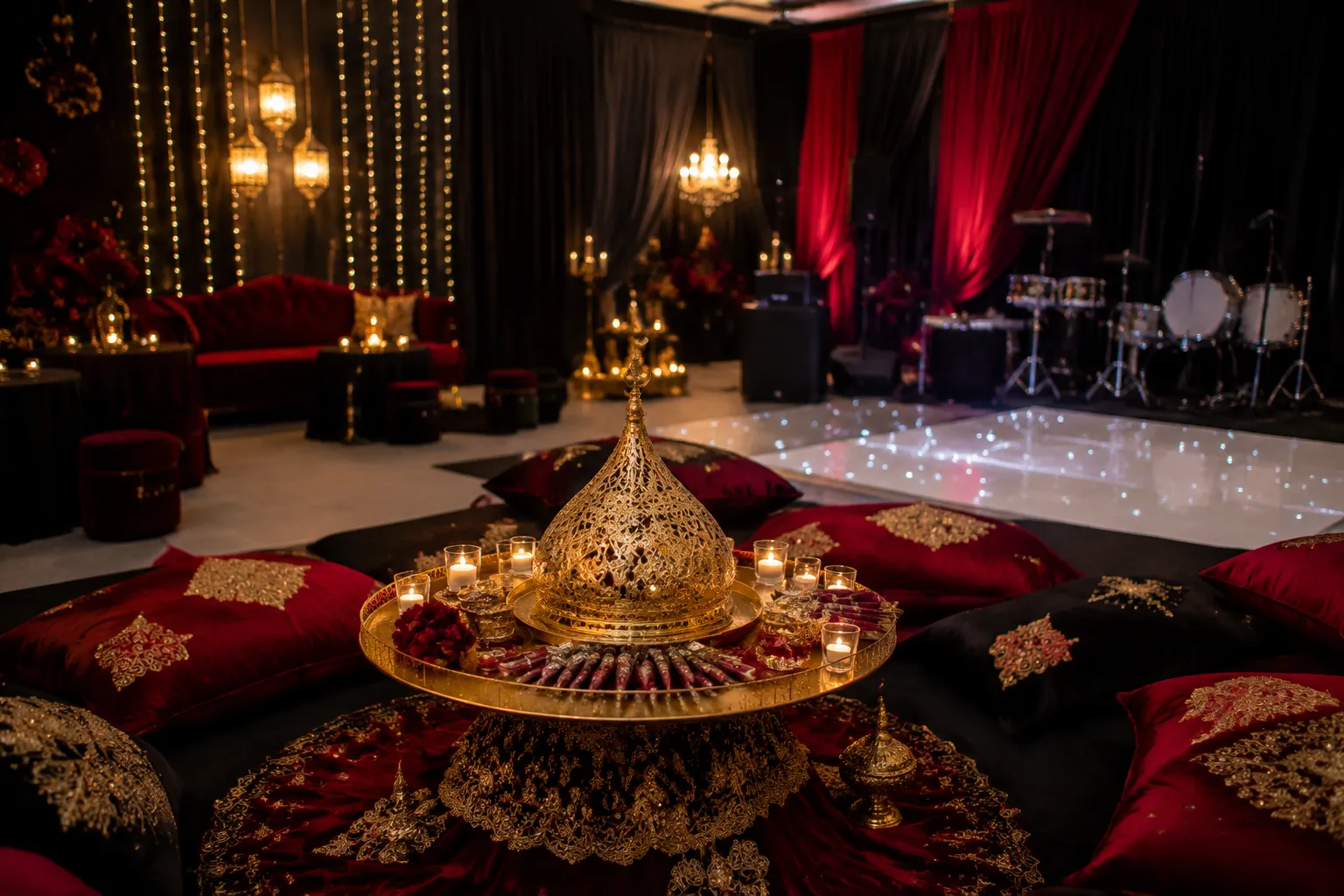
Modern kina gecesi ideas often adapt familiar ritual elements to an urban event format. The ceremony may take place in a wedding salon, hotel function room, restaurant, or dedicated event venue. Music, lighting, decoration, clothing, and entrances may be coordinated as one scheduled program.
Common adaptations can include:
- A planned entrance for the couple or bridal party
- Amplified music, dance sets, and selected traditional pieces
- Decorative henna trays, candles, seating areas, or stage elements
- Several outfit changes during the evening
- Choreographed performances by friends or family
- Mixed-gender participation or a wider circle of invited guests
- Organizer-led timing for henna, dancing, food, photographs, and guest participation
Ritual change can preserve recognizable objects and actions while shifting their social meaning. Henna, candles, traditional clothing, and farewell songs may remain visible, but they can function as family gestures, visual details, emotional markers, or entertainment within a staged event.
A modern format is not one standardized package. A couple may plan a highly coordinated salon event with a short family-led henna section. Another may use a modern venue while keeping the evening quiet, intimate, and free from choreographed entertainment.
Kina Gecesi Ceremony Comparison
The clearest comparison is how each format organizes attention, participation, and movement.
| Planning point | Traditional-leaning format | Modern-leaning format |
|---|---|---|
| Main setting | Home, courtyard, neighborhood, or community space | Salon, restaurant, hotel, or event venue |
| Ceremony lead | Older relatives, family members, or community participants | Couple, host, organizer, or scheduled program |
| Ceremony flow | Flexible and shaped by family memory | Timed around entrances, music, photographs, and venue service |
| Atmosphere | Intimate, emotional, participatory, and locally familiar | Coordinated, energetic, visually planned, and more public |
| Music | Local songs, folk repertory, singing, and games | Amplified music, DJ programming, dance sets, and selected traditional pieces |
| Clothing | One traditional or family-associated outfit | Traditional clothing combined with formalwear or multiple changes |
| Participation | Often shaped by family or gender expectations | More adaptable to mixed-gender, secular, or broader guest groups |
| Venue responsibility | Family manages much of the event | Venue or organizer may manage timing, decoration, and activities |
These are planning tendencies, not rules. A salon event can feel strongly connected to family tradition, and a home ceremony can include modern staging. The venue alone does not determine the meaning of the night.
What Happens First?
There is no single kina gecesi ceremony structure for every family. A clear evening can still follow a sequence that leaves room for local and family preferences:
- Guests arrive, settle, and greet both family sides.
- The bride or couple enters, depending on the preferred format.
- Music, dancing, or family activities begin.
- The evening pauses for the henna moment.
- Close relatives or selected participants apply the henna.
- Guests continue with dancing, food, photographs, or informal visits.
- The hosts close the evening according to the venue schedule and family expectations.
Some families place the henna near the beginning, while others build anticipation and introduce it later. Some include the groom, while others keep the central moment focused on the bride. Candle processions, wishes from an older woman, and later dance sequences may appear in particular regional or family settings.
Before booking the venue, write the intended sequence in plain language. Mark which moments need a quiet room, open floor, stage access, music control, staff assistance, or time without food service.
Family Roles and Guest Expectations
Family roles are often where traditional and modern preferences meet directly. Parents and older relatives may care about farewell symbolism, clothing, music, participation, or the order of the henna moment. The couple may care more about timing, comfort, photographs, a secular tone, or including friends from different backgrounds.
A practical division of roles might look like this:
- The couple chooses the moments that carry personal meaning.
- Parents and older relatives explain family expectations and remembered customs.
- A designated host announces transitions and keeps guests informed.
- One person coordinates music and entrances.
- A family representative confirms who will prepare or carry the henna materials.
- The venue contact manages room timing, food service, seating, and sound.
- A trusted relative helps guests understand when to join the floor or approach the bride.
Guests benefit from simple, visible cues. If the henna moment is private or limited to selected relatives, communicate that before the event. If everyone is invited to dance or receive henna, the host can say so clearly.
Do not assume that the bride’s mother, a mother-in-law, an older woman, or a particular group has the same role in every region. Family preference, religious practice, gender expectations, and event format can all change the arrangement.
Atmosphere and Etiquette Choices
Traditional and modern ceremonies can differ in atmosphere without one being more respectful. A traditional-leaning evening may emphasize emotion, family memory, and farewell. A modern evening may emphasize coordinated movement, photographs, music, and a visibly shared celebration.
Confirm these details with the couple and both family sides:
- Whether the event is women-centered, mixed-gender, or open to children
- Whether prayer or religious language is part of the program
- Whether alcohol is present or excluded
- Whether the bride wants a quiet henna moment or a large public presentation
- Whether guests should wear formal clothing, traditional clothing, or practical dance attire
- Whether photography is welcome during the emotional part of the ceremony
- Whether guests are expected to join songs, games, or dances
“Modern” does not communicate one shared set of values. Details such as alcohol, dress, religious language, and gender participation can affect family comfort even when everyone agrees on the venue and overall style.
Venue Differences
A home or courtyard can support family-led storytelling, informal participation, and a slower ceremony flow. The family may also need to manage seating, food, weather, sound, lighting, and cleanup.
A salon or restaurant can simplify scheduling and visual coordination. It may provide a stage, sound system, staff, seating plan, and decoration options. Its timetable can also make a family-led ceremony feel rushed, especially when food service, photographs, outfit changes, and dancing share the same room.
Ask the venue:
- How much uninterrupted time is available for the henna ceremony
- Where the henna application will take place
- Whether guests can move freely around the couple
- Who controls the music and microphone
- Whether candles, trays, fabrics, or other decorations are permitted
- How outfit changes affect the schedule
- When food service, photographs, and dancing will occur
- Whether the space supports the family’s preferred participation pattern
For diaspora couples, a planning meeting can help separate shared family expectations from regional memories and personal additions. The venue handoff should reflect that agreed version rather than an assumed package.
Religious, Secular, and Civil Boundaries
Kina gecesi sits alongside the civil marriage process, but it is not automatically the same event. Some couples include prayer or religious language, while others retain henna, songs, clothing, and family gathering without a religious presentation. Others choose a deliberately secular format.
Henna, candles, music, prayers, and gender participation can carry different meanings across families. The program should follow the couple’s and family’s stated preference rather than an assumption about what a Turkish wedding should contain.
Civil registration is a separate planning matter. For the current appointment process and document questions, contact the registering office for the relevant jurisdiction. A kina gecesi schedule does not answer office-specific requirements.
Choosing Between Traditional and Modern Formats
A traditional-leaning format may suit a family that values a home or community setting, remembered songs, older relatives’ participation, and a slower farewell-focused atmosphere.
A modern-leaning format may suit a couple that values venue coordination, a larger guest experience, structured entertainment, coordinated staging, or flexible participation across family and friend groups.
A blended format can help when expectations differ. The couple might use a salon for accessibility and timing, reserve a quiet section for the henna moment, invite an older relative to lead the wishes, and then open the floor to modern music and mixed participation.
The useful decision is not how many traditional symbols or production details the evening contains. Decide which moments matter, who leads them, what guests should expect, and which responsibilities belong to the venue. Then confirm the sequence with the family, venue, photographer, and relevant registering office where civil planning is involved.
Sources
- Consuming Ritual: Reframing the Turkish Henna-Night Ceremony
- 'Mother Bring the Henna': Kına Gecesi and Fragmented Imaginations of the Nation-state
- Cultural Codes of Marriage Rituals in Anatolia: From Ritual to Word in the Context of Oral Culture
- AZERBAYCAN VE ANADOLU KINA GECESİ
- Kültür Endüstrisi Bağlamında Evlilik Ritüelleri: Çorum Örneği
- ESKİŞEHİR İLİNDE YAŞAYAN MANAVLARIN KINA GECELERİ ve TÜRKÜLERİ: KARAOĞLAN KÖYÜ ÖRNEĞİ
- Türkiye’de Kına Gecesi Bohça Götürme Geleneği ve Toplumsal İşlevi
- KINA TÜRKÜLERI ÜZERINE