
Modern Kina Gecesi Ceremony Ideas Without Losing the Tradition
A modern kina gecesi works best when guests can recognize the ceremonial core, while the couple and families shape the setting, length, clothing, music, and atmosphere around their own needs.
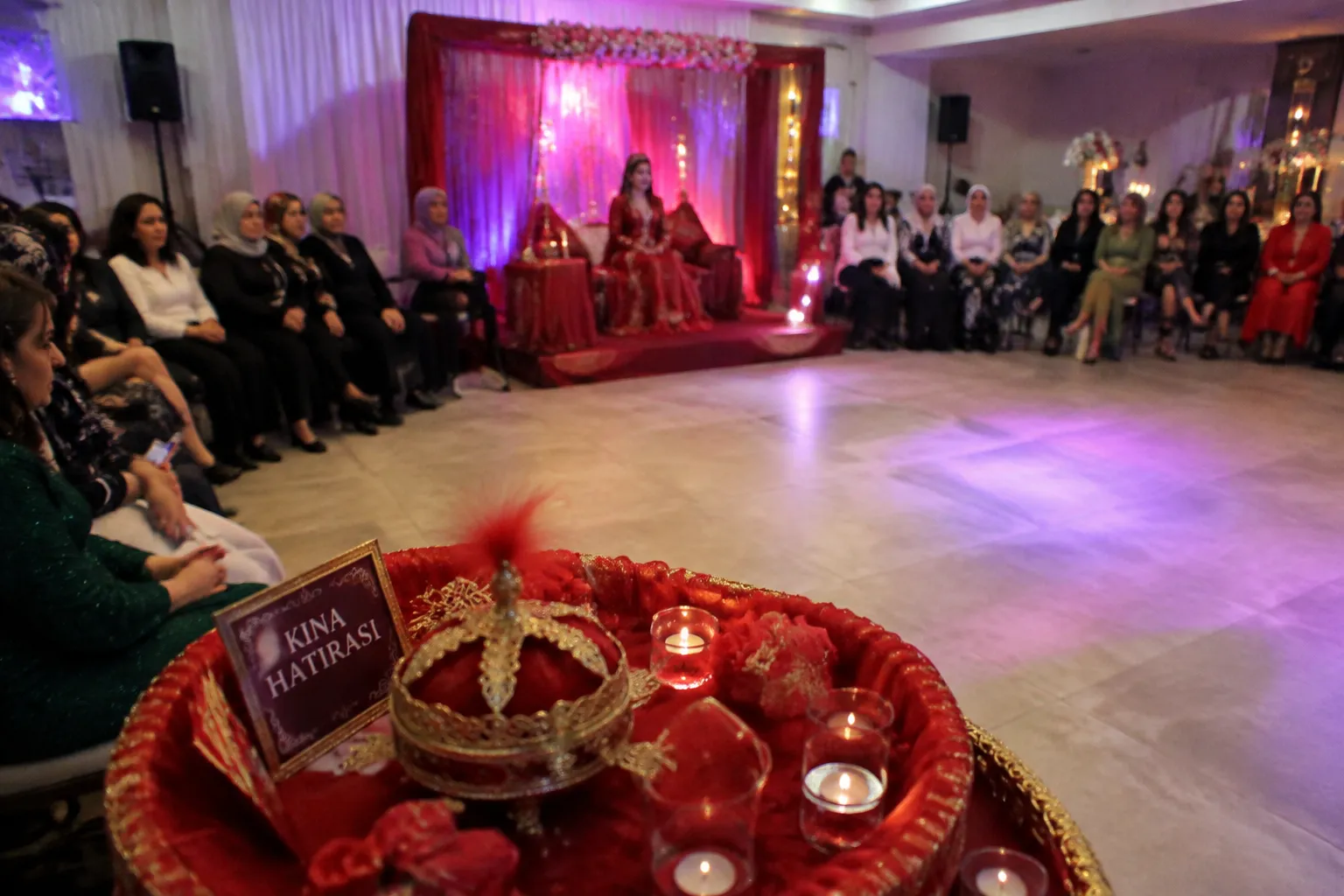
That core may include henna application, a henna tray, family participation, farewell songs, dancing, a bindalli, or a symbolic exchange such as a bohça. These elements do not follow one fixed order, and none represents every Turkish family or region. Their meaning and participants can change with family preference, regional practice, religious or secular choices, venue format, and diaspora experience.
The practical question is not whether the evening looks traditional enough. Decide which elements matter to your family, then give those elements a clear place in a workable ceremony flow.
Choose the Tradition Guests Should Recognize
Before choosing decorations or a playlist, decide what should tell guests that this is a kina gecesi.
For one family, that may be the henna entering the room. For another, it may be the bride changing into a bindalli, the singing of henna songs, a family blessing, or the first kina halayi. Some couples may also want the groom involved, while others prefer a women-centered or more broadly mixed celebration.
Choose two or three recognizable cues instead of trying to reproduce every practice associated with henna nights. Ask:
- Which part of the evening feels important to the couple?
- Which customs do parents, grandparents, or close relatives expect to see?
- Are there regional or community practices the family wants to keep?
- Does the couple want a religious, secular, or family-centered tone?
- Which sections can be shortened without losing their meaning?
- What will unfamiliar guests need explained before the ceremony begins?
A modern format is not automatically less meaningful. A traditional-looking format is not automatically suitable for every family.
Plan a Clear Modern Kina Gecesi Ceremony Sequence
A concise sequence helps guests understand when the evening changes from reception to ceremony. At some salon weddings, guests begin with dinner or general dancing before moving into the henna ritual. In a home or village setting, family participation may be visible from the start.
- Guest arrival and welcome. Give both family sides time to greet one another, settle into the venue, and understand the evening's general format.
- Opening music and gathering. Begin with music that suits the couple and family, combining popular, regional, or traditional selections as appropriate.
- Family entrance or henna-tray presentation. Bring forward the henna tray, candles, or other chosen objects. Agree in advance who carries the tray and who accompanies the bride.
- Clothing transition. The bride may change from a contemporary outfit into a bindalli or another traditional garment. This is optional, but it can give the henna section a clear visual change.
- Henna songs and farewell section. Songs associated with family separation may create a quieter moment before dancing resumes. Some families keep this section emotional; others make it shorter and more celebratory.
- Henna application. Henna may be applied to the bride, and in some families to the groom as well. Settle the participants beforehand, especially when several relatives expect a role.
- Dancing and guest participation. Move into kina halayi or other dances after the ceremonial moment. This makes the transition easier for guests who do not know the sequence.
- Photographs and informal celebration. Leave time for photographs with both family sides, the tray, the bindalli, and the people who took part in the application.
This is a planning framework, not a national script. Research on Anatolian communities records differences in timing, duration, location, music, and participation, including ceremonies held over more than one evening. A shorter salon event can still preserve recognizable cues when its transitions are deliberate.
Keep Kina Gecesi Family Roles Visible
Kina gecesi often involves more than the couple. Mothers, sisters, aunts, close friends, and members of both family sides may carry the tray, sing, dance, prepare the henna, or accompany the bride.
Modern planning becomes easier when these responsibilities are agreed before the event:
- Ceremony lead: keeps the sequence moving and tells the venue team when each section begins.
- Henna-tray group: carries or presents the tray and accompanies the bride.
- Henna preparer: checks the materials and explains the application plan.
- Family representatives: welcome guests and coordinate both sides.
- Photographer or trusted guest: knows which family moments should not be missed.
- Venue contact: confirms sound, lighting, seating, food, drink, and timing arrangements.
These do not need to be formal titles during the evening. They simply reduce uncertainty when the music changes or the bride leaves to change clothes.
Family expectations may differ. One relative may see the henna as an intimate women-led ritual, while another expects the groom and his family to participate. Discuss that difference privately and present the chosen arrangement clearly, rather than treating one preference as the only correct form.
Use Clothing and Music to Mark the Ceremony
Clothing can create a clear shift without turning the evening into a large production. A bride may wear a contemporary outfit for arrival and dancing, then change into a bindalli for the henna application. She might also use a traditional sash, shawl, or head covering only during that section.
Close relatives can coordinate colors without wearing identical outfits. A groom may choose a traditional waistcoat or another meaningful piece if it fits the family's plan. These choices distinguish the ceremonial section from the reception; they are not costume requirements.
For diaspora couples, clothing may bring together family heritage, local expectations, and the couple's own identity. The result can be hybrid, contemporary, traditional, or deliberately simple.
Music should signal what guests are expected to do next. Use a distinct cue when general dancing gives way to the henna moment, then use henna songs for the application and farewell section before reopening the dance floor.
- An arrival selection for conversation and greeting.
- A recognizable cue for the henna-tray entrance.
- Henna songs for the application and farewell section.
- Kina halayi or other dance selections for group participation.
- Contemporary songs chosen by the couple.
- A quieter backup track if the room becomes too loud.
Regional and community research describes substantial variation in henna songs. A song documented in one locality is an example, not a requirement for every family. Tell the musician or sound operator exactly when the music should change.
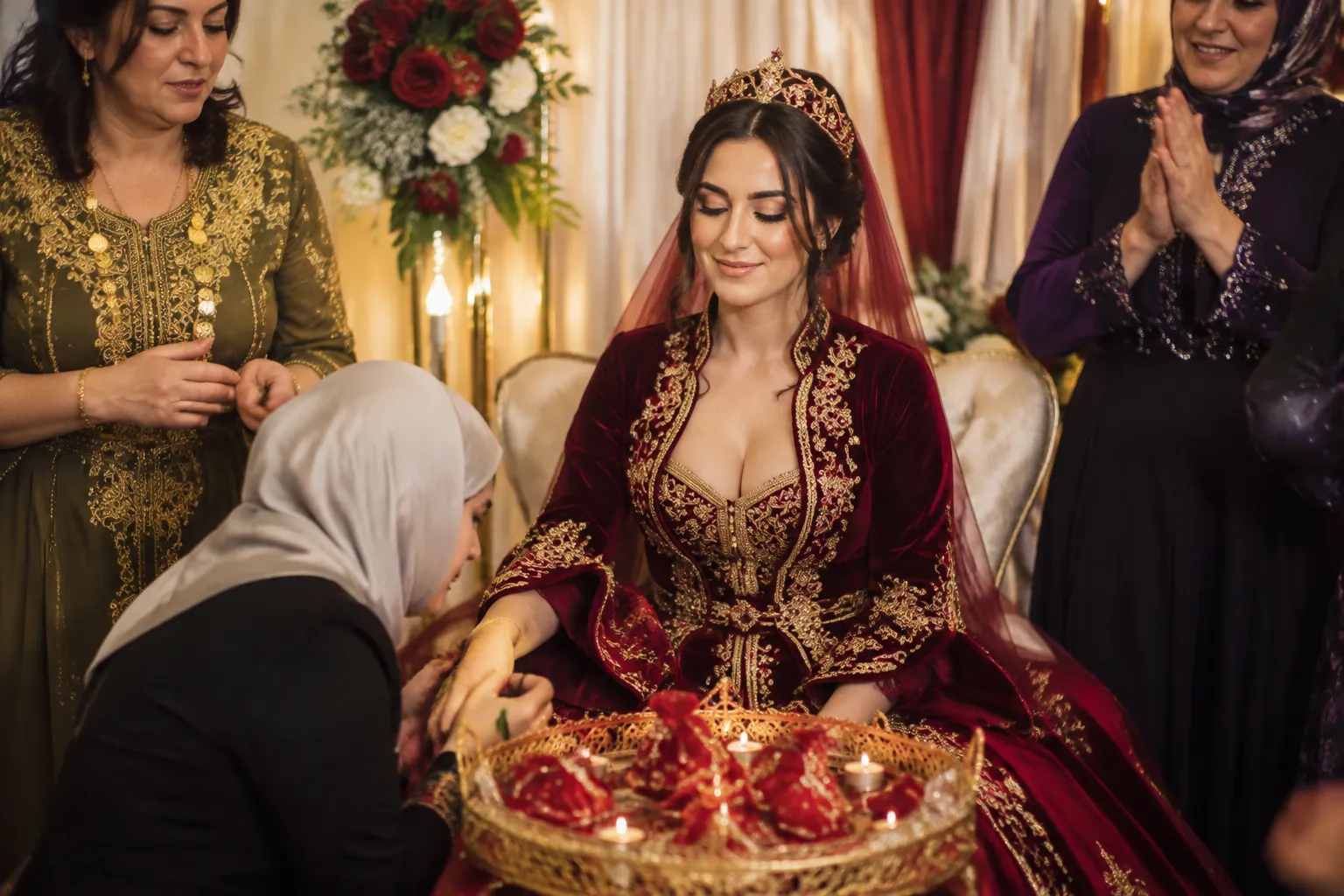
Make the Henna Application Manageable
The henna application is often the point around which the rest of the evening is organized. Treat it as a real activity, not only as decoration.
- Who will prepare and carry the henna?
- Who will apply it?
- Will the groom participate?
- Which relatives should take part?
- Where will the couple sit or stand?
- How will guests see the moment?
- Can photographs be taken without interrupting the ritual?
- How long is the application expected to take?
- What does the venue permit regarding materials, staining, candles, and surfaces?
The tray may be carried through the room, placed at the ceremony area, or used as a visual centerpiece. Its presence can help guests recognize the transition even in a modern salon.
Do not assume that every symbolic detail carries the same meaning for every family. Some couples frame the ritual as a family farewell and transition. Others understand it mainly as a joyful cultural gathering. The couple should decide which tone guides the evening.
Choose a Venue That Supports the Ceremony
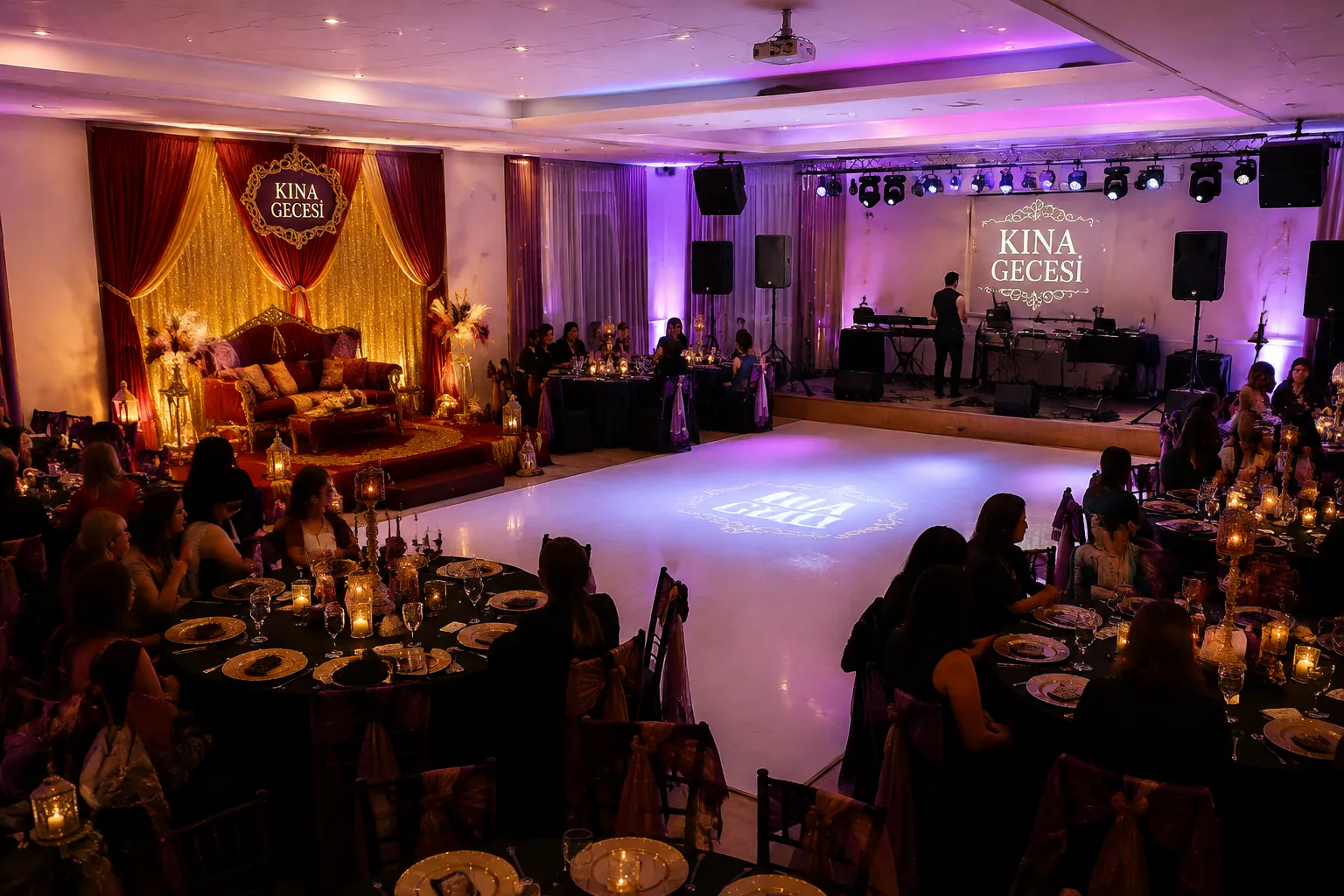
A modern kina gecesi venue is more than a backdrop. Its layout affects whether guests can see the tray, hear the songs, move into the dance, and participate without confusion.
Before booking, ask about:
- Event duration and end time.
- Seating and dance-floor layout.
- Sound equipment and microphone access.
- Lighting during the henna application.
- Catering and drink arrangements.
- Surface protection for henna materials.
- Candle or open-flame restrictions.
- Changing space for the bride.
- Photography access.
- Decoration limits and supplier rules.
- Whether the ceremonial area can be separated from the main dance floor.
A supper-club or salon setting may suggest a contemporary dinner celebration, while a home courtyard or village setting may make family participation more immediate. Neither format determines whether the ceremony has meaning.
Food and drink deserve an early family conversation. A hospitality choice that feels ordinary to one group may carry religious or family implications for another. Discuss the menu, drinks, seating, and service style with the people whose expectations shape the evening.
Give Guests a Clear Expectation
Guest etiquette becomes easier when the invitation and arrival experience explain the format.
- Say whether the evening is a henna night, a combined henna and dance event, or part of a larger wedding schedule.
- Explain whether traditional or formal clothing is encouraged.
- Share when the henna section is expected to begin.
- Note whether children and mixed-age relatives will attend.
- Explain whether guests should join the dance or remain seated during the application.
- Identify a separate ceremony area when the venue has one.
- Clarify food and drink arrangements that may affect guest expectations.
For guests unfamiliar with kina gecesi, a brief explanation from the host or family representative is more useful than assuming they will know when to stand, dance, sing, or approach the couple.
Use Bohça and Other Symbolic Elements Selectively
A bohça can appear as a family exchange, a visual object, or a small part of the evening's story. Research on Turkish marriage customs describes bohça practices in several regions and connects them with gift exchange, family relationships, social learning, and wishes for a new household.
The practice is not identical everywhere. Ask what the object represents in each family and whether it belongs in the henna-night sequence, an earlier asking or engagement visit, or a private family exchange.
The same principle applies to blessings, games, symbolic foods, and prosperity-related customs. Include them when participants understand their purpose and want them present. Do not add them simply because a checklist suggests that every ceremony needs them.
Adapt the Evening for Different Family Contexts
A modern kina gecesi may bring together different expectations about music, dress, gender participation, food, drink, prayer, and the emotional tone of the farewell.
Separate family preference from assumed cultural obligation. Ask what the couple wants, what parents hope to see, and what the venue can support. Then give each important element a defined place in the sequence.
For diaspora couples, the evening may combine Turkish music, traditional clothing, contemporary venue design, local customs, and guests with different cultural backgrounds. Research describes diaspora weddings as spaces where heritage and present-day identity are negotiated together. That supports flexibility, but it does not provide one complete model for every diaspora community.
One couple may preserve the henna application and songs, shorten the formal section, include both family sides, and use a contemporary dance program afterward. Another may keep a more intimate women-centered gathering. Both can be coherent choices when participants understand the plan.
A Practical Decision Rule
Keep an element if it helps guests recognize the ceremony, matters emotionally to the couple or family, connects both family sides, preserves a meaningful song or object, creates a clear transition, or gives guests a respectful way to participate.
Shorten or redesign it when it creates confusion, conflicts with family preferences, exceeds the venue's limits, or no longer reflects what the couple wants.
The strongest modern format is not necessarily the most elaborate one. It is the evening where the henna moment, family roles, music, clothing, guest behavior, and venue layout point in the same direction while leaving room for the family's own variation.
Sources
- Consuming Ritual: Reframing the Turkish Henna-Night Ceremony
- Home Beyond Borders: Turkish Wedding Ceremonies as the Embodied Extension of Diasporic Space in German-Turkish Context
- Cultural Codes of Marriage Rituals in Anatolia: From Ritual to Word in the Context of Oral Culture
- 'Mother Bring the Henna': Kına Gecesi and Fragmented Imaginations of the Nation-state
- Kültür Endüstrisi Bağlamında Evlilik Ritüelleri: Çorum Örneği
- ÇANKIRI'NIN KIZILIRMAK İLÇESİNDE “KINA GECESİ” VE “GELİN ALMA” GELENEĞİ ÜZERİNE
- Türkiye’de Kına Gecesi Bohça Götürme Geleneği ve Toplumsal İşlevi
- ESKİŞEHİR İLİNDE YAŞAYAN MANAVLARIN KINA GECELERİ ve TÜRKÜLERİ: KARAOĞLAN KÖYÜ ÖRNEĞİ