
Kina Gecesi Timeline: When to Do Entrance, Henna, Food, and Dancing
A workable kina gecesi timeline starts with guest arrival and an entrance, allows time for food and opening dances, then gives the henna ritual an uninterrupted place before dancing resumes. This is a planning template, not a single Turkish sequence. Family preference, venue format, regional practice, religious or secular choices, and diaspora settings can all change the order.
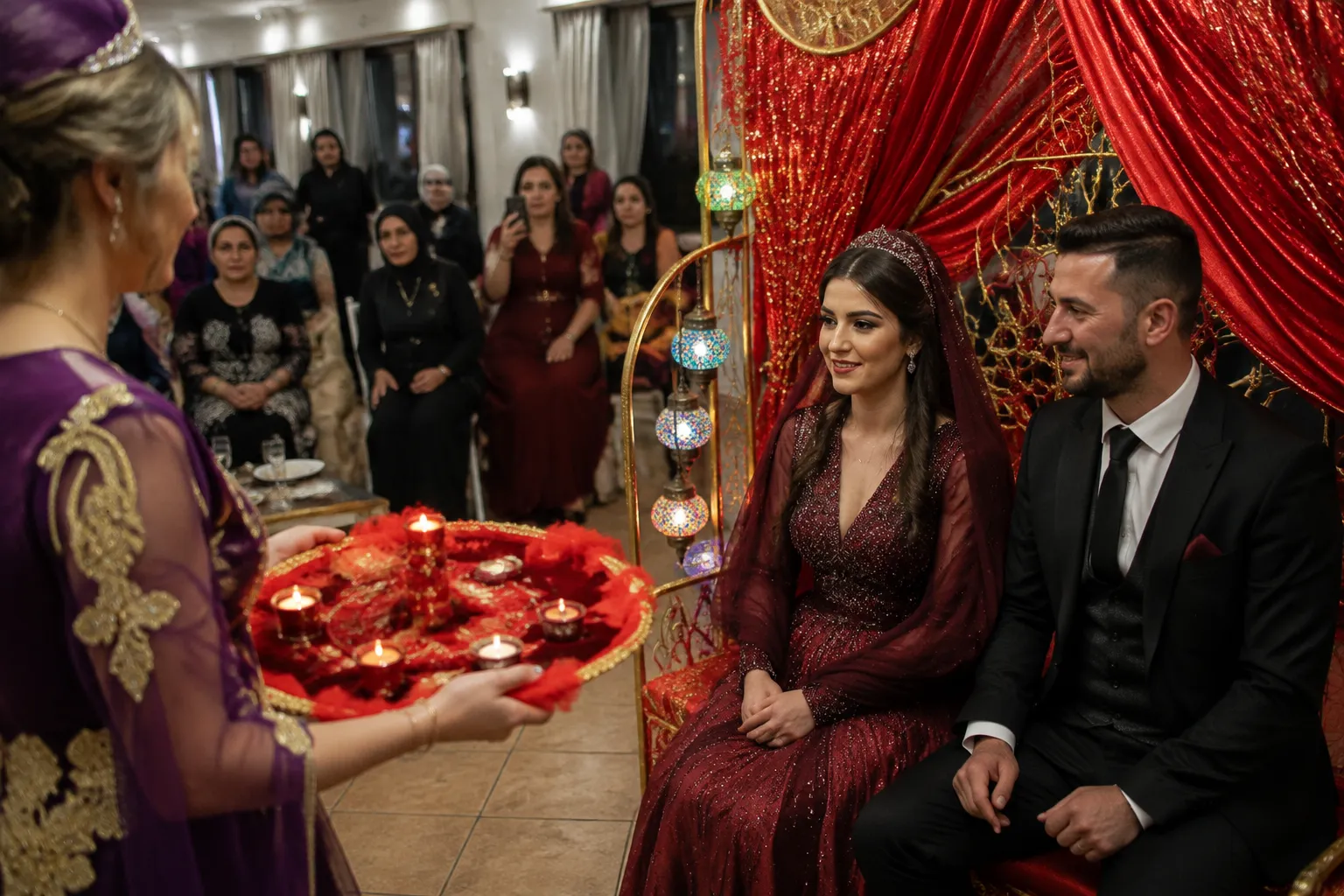
The main planning decision is simple: keep the henna ritual away from dinner service, late arrivals, and an active dance floor. Confirm the final order with the couple, both family sides, the person leading the henna, the caterer, the musicians, and the venue.
Sample Kina Gecesi Timeline
This example suits a salon or reception venue. Its clock times are practical estimates, not customary times established by research.
| Time | Event | Planning focus |
|---|---|---|
| 6:30 p.m. | Guest arrival | Leave room for greetings and flexible seating. |
| 7:00 p.m. | Bride or couple entrance | Confirm who enters and whether the groom participates. |
| 7:15 p.m. | Opening music and dancing | Let guests settle before the ceremonial transition. |
| 7:45 p.m. | Food service | Choose whether guests eat before the central ritual. |
| 8:30 p.m. | Clothing change, if planned | Allow private time for the bride and helpers. |
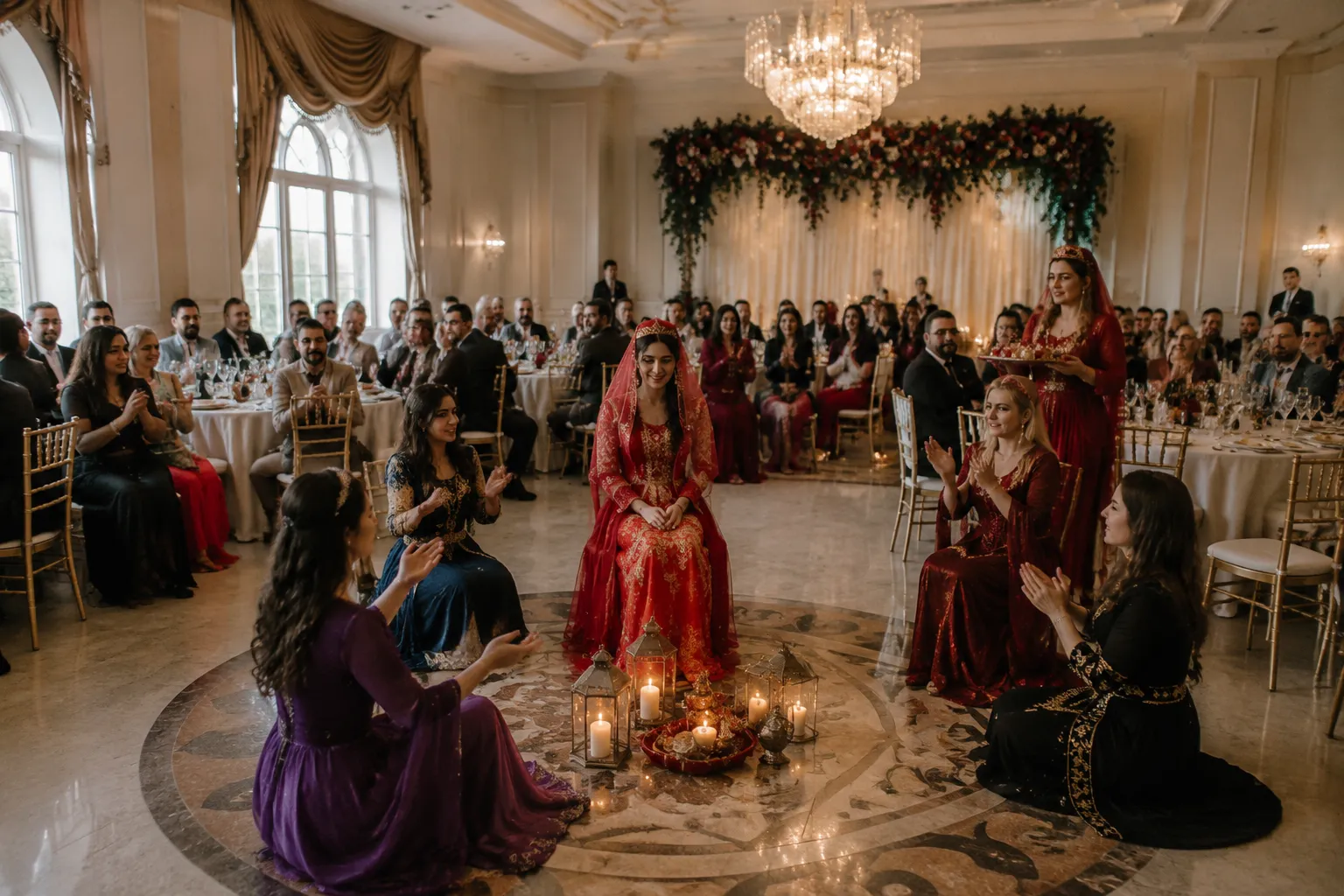
| 8:45 p.m. | Candle procession and henna tray | Clear the floor and prepare the seating. |
| 9:00 p.m. | Henna songs and application | Keep service and guest movement paused. |
| 9:30 p.m. | Photographs and dancing | Reopen the floor on a clear music cue. |
| 10:00 p.m. | Dessert, tea, or later service | Coordinate service with dancing and photographs. |
| 10:30 p.m. onward | Dancing and close | Work within the venue and musician end times. |
A home or village celebration may combine hospitality, food preparation, songs, and henna more closely. It may not follow a clock-based salon schedule at all.
When to Plan the Entrance
The entrance can happen after most guests arrive or immediately before the henna procession. An early entrance works well when the couple wants to greet guests, dance, or complete photographs first. A later entrance creates a sharper transition into the ritual.
If the bride changes into a bindallı or another special garment, schedule that change before the ceremonial entrance. Avoid leaving guests without music, food, or a clear cue during the change.
- Decide whether the bride enters alone, with friends, relatives, or the groom.
- Confirm who carries the tray and whether friends carry candles.
- Choose whether the couple dances before taking their seats.
- Assign one person to announce or cue the transition.
- Plan how late arrivals can enter without crossing the central area.
When to Serve Food
Food may come before the henna, during an earlier hospitality period, or after the ceremonial section. Research describes different relationships between meals, gifts, visits, and henna across communities, but it does not establish one universal service order.
At a large salon reception, serving the main meal before henna can settle the room and reduce movement later. The tradeoff is a weaker transition if service runs long. Food after henna gives the ritual a stronger center, but guests may be standing, taking photographs, or returning to the dance floor.
A practical compromise is to offer drinks and light refreshments during arrival, serve the main meal before henna, then keep dessert or tea for later. Ask the caterer when servers will pause and how quickly tables can be reset.
When to Begin the Henna Ritual
Begin after the principal participants have arrived and guests have had time to greet one another. Opening dancing can create energy first, while a planned music change helps everyone recognize that the central ritual is starting.
Documented accounts describe lively music giving way to henna songs, a seated bride, a tray, candles, family participation, and henna application. These elements are not fixed. Some families include the groom, while others center the bride and women from both family sides. Mixed-gender, secular, religious, and diaspora celebrations may adapt the participants, clothing, music, and language.
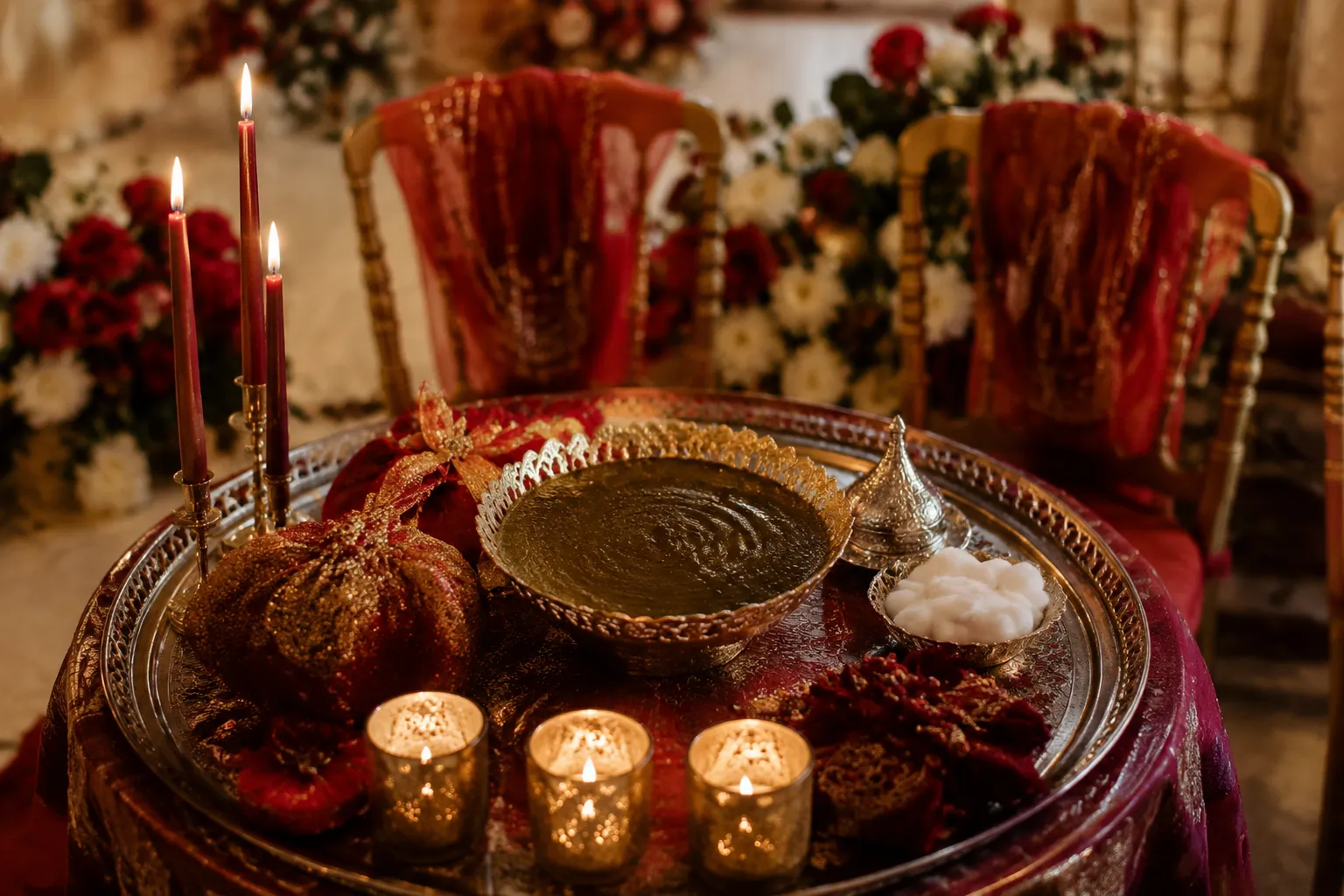
- Name the person who prepares, carries, and watches the henna tray.
- Confirm who applies henna and whether the groom participates.
- Agree on songs, spoken remarks, prayers, or quiet moments.
- Decide whether guests will also receive a small amount of henna.
- Allow time for wrapping hands and taking photographs.
When Dancing Fits Best
Dancing can frame the ritual on both sides. Opening dances occupy early arrivals and help guests join the evening. After henna and photographs, a strong music cue can return the room to oyun havası, halay, or the family’s chosen repertoire.
The playlist does not need to reproduce one inherited model. Research on German-Turkish weddings describes combinations of Turkish folk, Arabesk, popular, and contemporary music. What matters operationally is that guests can recognize the entrance, the ritual transition, and the return to dancing.
Give the musicians or DJ a written cue sheet covering the entrance, slower transition, seating pause, henna songs, family remarks, floor reopening, and closing announcement. Separately confirm the venue’s current limits for sound, end time, floor access, and procession equipment; cultural research does not establish those venue procedures.
Who Keeps the Evening Moving
Clear roles prevent the ceremony flow from turning into improvised instructions.
- The couple: Select the meaningful elements and decide how each partner participates.
- Both family sides: Clarify expected songs, gifts, participants, and regional practices without assuming identical roles.
- The henna leader: Coordinates the tray, seating, songs, application, wrapping, and handoff to dancing.
- The caterer: Sets service windows around the entrance, ritual, photographs, and guest movement.
- The musicians or DJ: Follow the agreed cues rather than guessing when the mood should change.
- The venue contact: Confirms layout, changing space, chairs, sound limits, and closing time.
Guests can make room for the procession, avoid crossing the central area, and wait for the family’s cue before dancing resumes. Emotional responses vary. Neither the bride nor the guests need to perform sadness in a prescribed way.
What Can Change the Order
A kina gecesi may take place at home, in a village setting, salon, restaurant, or another reception venue. It may occur the day before the wedding, earlier in a longer wedding period, or within a combined celebration.
Regional studies document different relationships among henna, food, gifts, family visits, and entertainment. Some accounts center women and girls around the bride; others include the groom and his relatives. A practice recorded in Çankırı, Ankara, Isparta, Giresun, or Ordu remains a local example, not a standard for every Turkish or Turkish-diaspora family.
The henna night is a cultural and family celebration. Its timeline does not determine civil marriage or registration status, which is a separate matter for the registering office in the couple’s location and circumstances.
Final Run-Sheet Check
- Entrance time, participants, and announcement cue
- Order of food, opening dances, henna, photographs, and later dancing
- Henna applicator, tray carrier, and any family gift gesture
- Tray, henna, wrapping materials, chairs, clothing, and changing space
- Songs, microphone cues, pauses, and floor-reopening music
- Catering windows, guest movement, sound limits, and closing time
- Regional, religious, secular, or diaspora preferences affecting the sequence
Build the run sheet around one protected henna period, then fit food and dancing to the venue. Before circulating it, have the couple, family coordinators, henna leader, caterer, musicians, photographer, and venue contact confirm their handoffs.
Sources
- Kına Gecesi Ritüelinde Anlam Arayışı: Çağrışımlar, Düşünyapılar, Dönüşümler
- 'Mother Bring the Henna': Kına Gecesi and Fragmented Imaginations of the Nation-state
- Home Beyond Borders: Turkish Wedding Ceremonies as the Embodied Extension of Diasporic Space in German-Turkish Context
- Cultural Codes of Marriage Rituals in Anatolia: From Ritual to Word in the Context of Oral Culture
- Çankırı'nın Kızılırmak İlçesinde “Kına Gecesi” ve “Gelin Alma” Geleneği Üzerine
- Türkiye’de Kına Gecesi Bohça Götürme Geleneği ve Toplumsal İşlevi
- Çiçekpınar (Şarkikaraağaç-Isparta) Dügün Ritüeli
- Metaphorical Language and Function of the “Bridal Pick-Up” Ritual in Anatolian Traditional Weddings with Its Origin and Reflections