
Kina Gecesi Ceremony Timeline Step by Step
As guests settle in, the family side usually decides when the evening shifts from ordinary celebration to the central henna sequence. A commonly used kına gecesi ceremony timeline moves from arrivals and dancing to the candle procession, farewell songs, henna application, and a final return to socializing.
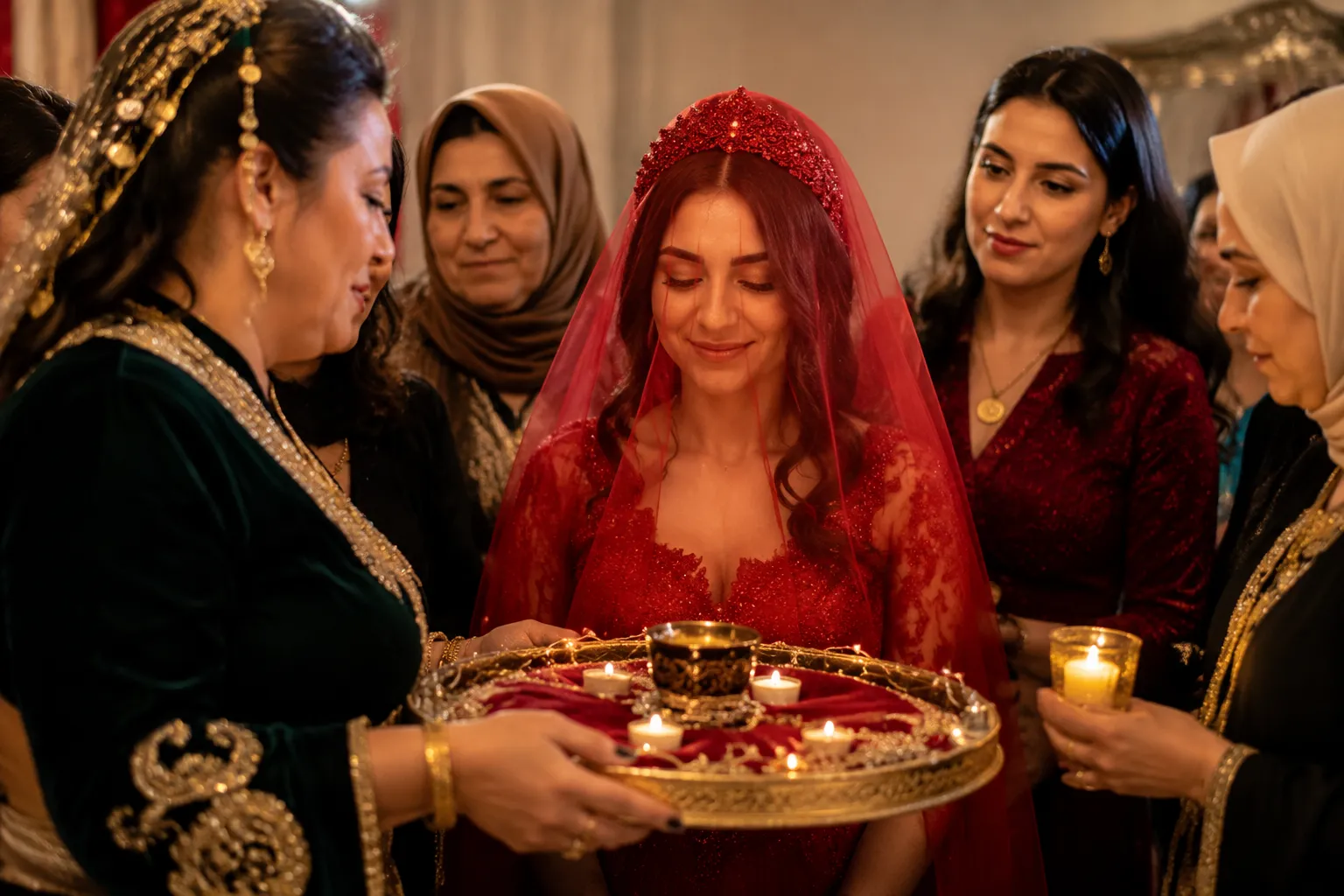
This is a working sequence rather than a fixed script. Families, regions, religious preferences, secular choices, diaspora settings, and venues may shorten, combine, or omit different parts. Confirm the running order, participants, clothing, music, food service, gifts, and venue responsibilities before the invitations are finalized.
1. Guests Arrive and Settle In
The evening often begins with relatives, friends, and both family sides arriving at a home, garden, salon reception, or another event venue. In many families, women relatives and the bride’s friends have a visible role early in the evening. Some contemporary celebrations include the groom and male relatives from the start, while others keep the opening closer to a women’s gathering.
Before guests arrive, confirm where the bride will change, where the henna will be prepared, and whether the venue supplies trays, candles, seating, or serving staff. Food and drinks may begin on arrival or later. These practical choices can affect the ceremony flow more than the symbolic customs themselves.
2. Music, Dancing, and Social Time Begin
Music and dancing commonly form the first active part of the night. Folk dances, group dancing, and contemporary music may all appear, depending on the family, generation, venue, and diaspora setting.
The bride may join in wearing a bindallı-style outfit, another henna-night garment, or a modern evening dress. She may also change later or keep one outfit throughout the event. This opening can be brief or extended, so the planner should agree on a clear transition before the formal sequence begins.
Guests should know when the dance floor will close temporarily, where the bride or couple will sit, and when the candle and henna-tray procession will enter. A short announcement or music cue can help the room move into the next stage.
3. The Bride Changes or Takes Her Place
Before the central henna moment, the bride may change into a traditional-style outfit or another garment chosen for the occasion. A red veil or covering may be placed over her head, although clothing and color choices vary.
She may sit in the center of the room, sometimes beside the groom if he is participating. In other celebrations, she sits with female relatives and friends around her. The seating arrangement is therefore a family and venue decision.
Check whether the room needs one chair or two, space for the procession, a table for the henna tray, and a clear route from the entrance to the couple. Parents, elders, the henna applicator, and the photographer may also need a planned position.
4. The Candle and Henna-Tray Procession May Enter
A recognizable kına gecesi step-by-step flow often includes a young woman carrying the henna tray, followed by women or girls holding candles. They may walk around the bride or couple while the music slows.
Farewell songs or other familiar henna-night songs may accompany the entrance. A relative or elder may offer a blessing, prayer, or personal good wishes. Other families use recorded music, a simpler tray entrance, or a modern stage presentation.
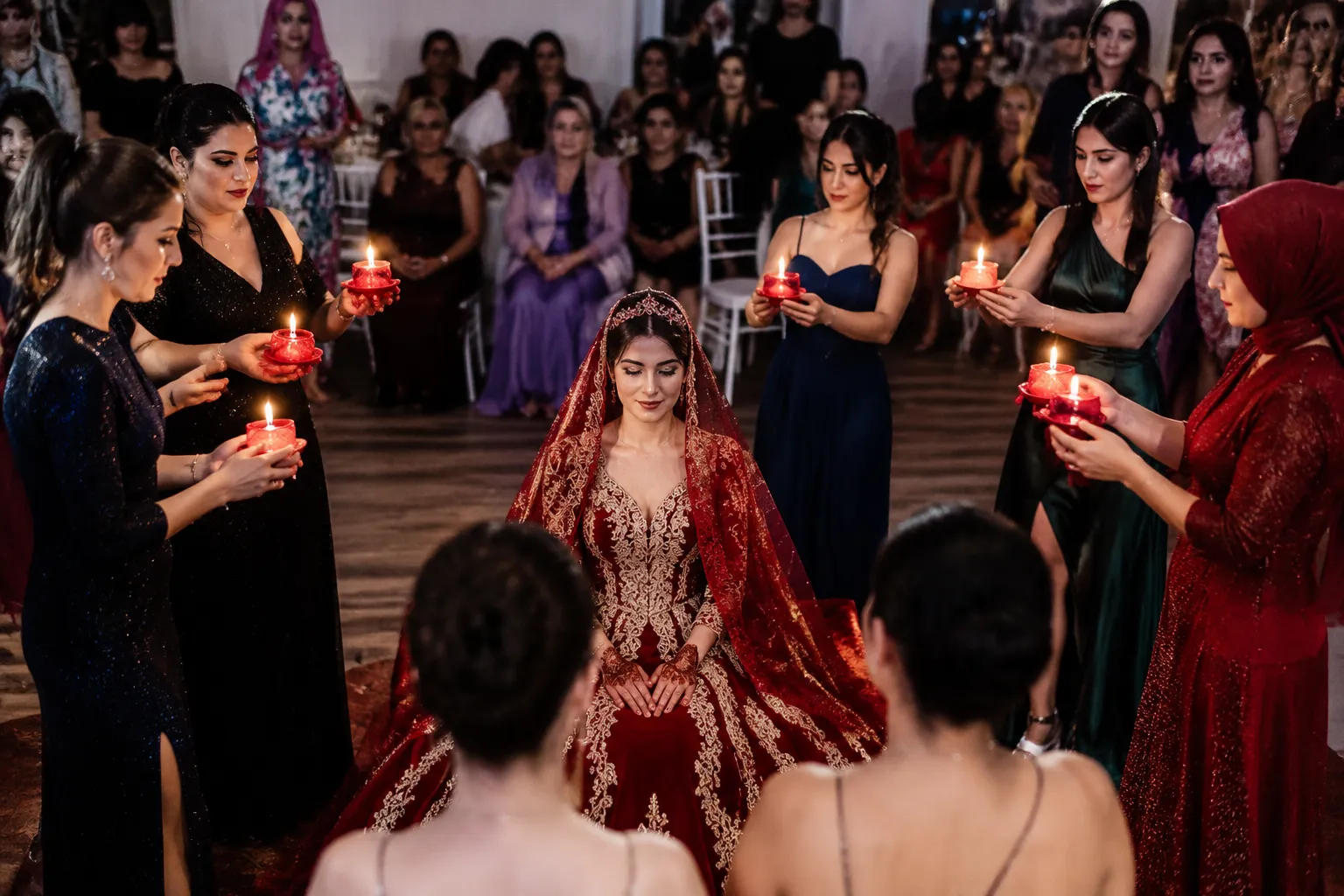
Guests generally pause ordinary dancing and gather around the bride during this public moment. The venue may have its own timing for entrances, lighting, or stage access, so those details belong in the event schedule rather than being assumed from another family’s celebration.
5. Farewell Songs and Family Gestures
The atmosphere may become quieter after the procession. Farewell songs can refer to leaving the bride’s parental home and entering married life, which may make the bride, her mother, relatives, or guests emotional.
Some families include a spoken blessing or short prayer. Others move directly to the henna application. A secular family may keep the music and family gestures while leaving out religious language. Discuss the tone with the couple before the event, especially if relatives are preparing remarks or leading a song.
6. The Henna Applicator Comes Forward
The henna applicator is often a woman from the groom’s side, sometimes the groom’s mother. A sister-in-law, aunt, close friend, or another relative may take the role instead.
Some local accounts describe choosing a woman believed to have a settled or fortunate marriage. That is a cultural expectation found in certain communities, not a requirement for every family today.
Agree in advance on who will apply the henna, who carries the tray, who presents any gift, and whether a blessing or announcement accompanies the moment. Clear role assignments prevent hesitation when the music changes and the procession arrives.
7. The Bride May Delay Opening Her Hand
In one commonly described version of the ritual, the bride keeps her palm closed or pulls her hand away playfully before the henna is placed. A gold coin may then be offered by the groom’s mother or another member of the groom’s family.
Once the gesture is accepted, henna is placed in the bride’s palm, and her hand may be covered with a cloth, handkerchief, glove, or another practical covering. Some couples skip the staged exchange, use a different gift, or apply the henna without a delay.
A gold coin may belong to the henna-night ritual, form part of a separate wedding gift, or be left out. Discuss expectations privately with the family members involved, particularly when several relatives are contributing gifts.
8. Henna Is Applied
Henna is usually applied to the bride’s hand, often the palm. In some local practices, the groom or other guests also receive henna. Modern celebrations may use a red glove or another covering while the color develops.
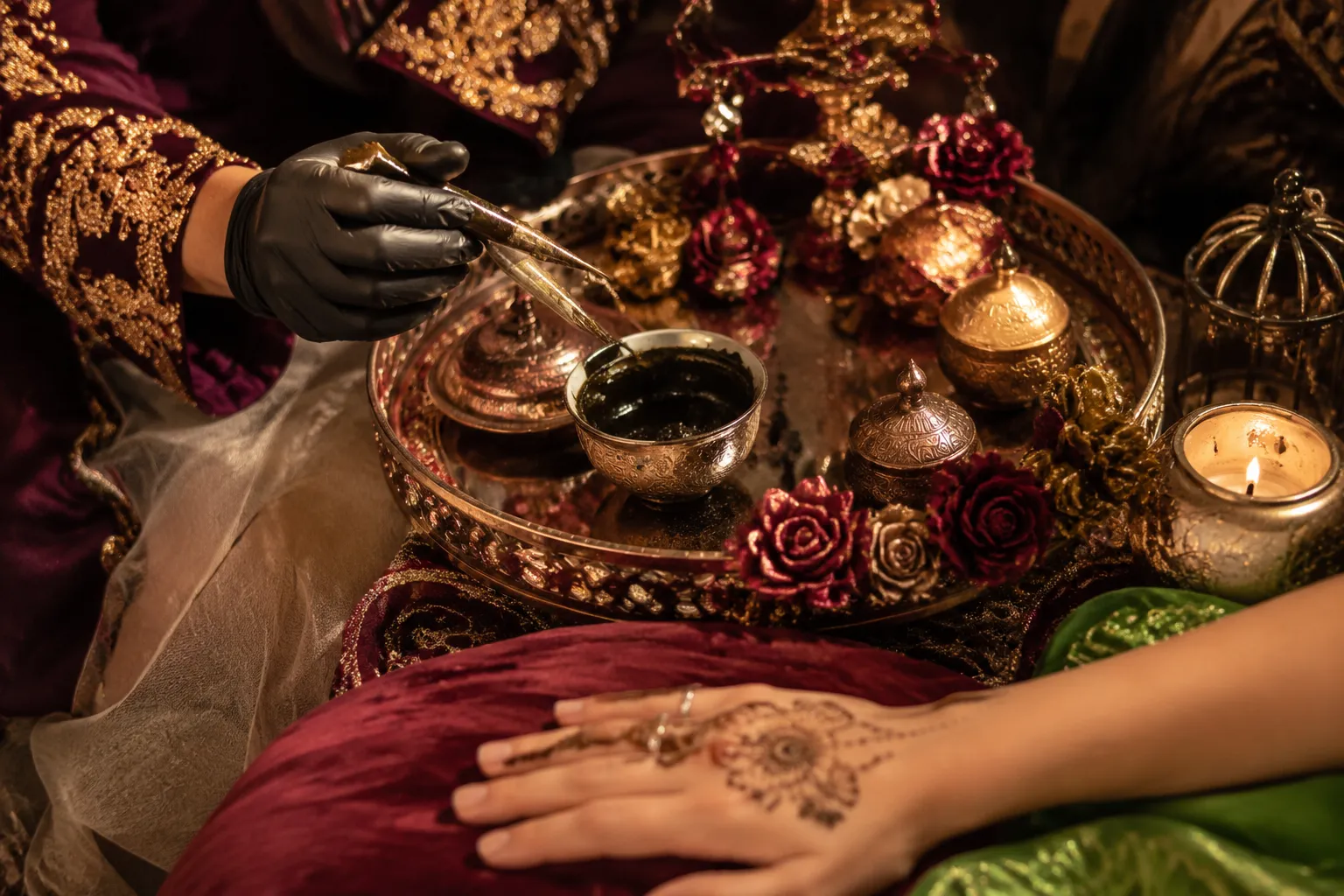
Before the procession begins, confirm who prepares the henna, whether it can be mixed at the venue, how many people will receive it, and what will protect clothing, furniture, and flooring. Keep the tray, coverings, gift, and seating ready so the central moment does not stall.
9. The Groom May Receive Henna
Some regional and contemporary formats include the groom after the bride’s henna has been applied. He may sit beside her and receive henna in his palm.
Other families understand kına gecesi primarily as an event for the bride and her female relatives. The groom may attend the whole evening, join only the central sequence, arrive later, or not attend. The invitation wording, seating plan, photography schedule, and music cues should reflect the choice made by the couple and families.
10. Dancing and Socializing Resume
After the henna application, the evening commonly returns to music and dancing. Group dances, including halay in some settings, may continue with the couple and guests.
Food and drinks may have been served throughout the evening or become more prominent afterward. Remaining henna may also be shared with guests. Once the formal sequence is complete, the venue team should know when ordinary service, photography, and dancing resume.
11. The Evening Closes According to the Setting
A salon event may end after a final dance set, while a home or village celebration can continue later into the night. Older village formats could connect several days of wedding activity, whereas urban and diaspora celebrations are often compressed into one henna night and a separate wedding event.
The bride may return to her parents’ home, leave with the couple, or simply finish the evening as part of a larger wedding program. Confirm the final farewell, photography timing, gift handling, food or favors, and venue end time with the relevant people.
What Commonly Happens at Kına Gecesi?
- Guests arrive and socialize.
- Music, dancing, and refreshments begin.
- The bride changes clothing or takes her place.
- A candle and henna-tray procession may enter.
- Farewell songs, blessings, or personal remarks may follow.
- The henna applicator approaches the bride.
- A gold coin may be offered before the bride opens her hand.
- Henna is applied and the hand is covered.
- The groom may receive henna as well.
- Dancing, food, photographs, and conversation continue.
- The evening closes according to the family and venue plan.
This outline explains a familiar ceremony flow, but it does not make every item a required part of kına gecesi.
Who Is Usually Involved?
- The bride: the central participant in the henna and farewell sequence.
- The groom: present throughout, present for selected moments, or absent according to family preference.
- The groom’s mother: sometimes presents the gold coin or applies the bride’s henna.
- The bride’s mother: may join farewell songs, blessings, or family gestures.
- Friends and younger relatives: may carry candles, lead songs, or bring in the henna tray.
- Guests: observe the central ritual, join dancing, and offer congratulations or gifts.
- The planner and venue team: coordinate seating, music cues, lighting, food service, photography, and timing.
A role seen in another family’s celebration should not be assigned automatically. Ask the people involved, then record the decision in the event schedule.
Where the Timeline Can Change
Kına gecesi may vary with locality, family history, religious practice, secular preference, generation, venue, budget, and diaspora setting. Some village traditions place it within a multi-day wedding, while urban families may hold a shorter salon reception or home gathering.
Regional and fieldwork accounts describe differences in the number of wedding days, host family, clothing, songs, instruments, guest mix, henna applicator, gold gifts, and gift handling. Historical accounts also describe separate girls’ or women’s evenings, while contemporary formats may combine participants into one event.
For diaspora couples, Turkish family customs may be combined with local event hours, mixed-gender attendance, different music choices, remote participation, or a shorter ceremony. These examples explain why the family side and venue should agree on the actual running order rather than relying on a single standard timeline.
Religious and Secular Preferences
Henna can carry cultural, family, religious, or personal associations, but families do not organize the evening in exactly the same way. Some include prayers, Quranic recitations, or blessings from elders. Others use songs, dancing, clothing, and family participation without religious language.
The useful planning question is which elements the couple and families want to include, and who should lead them. Confirm any blessing, music choice, religious participation, or separate family gathering before the program is printed.
What Should Be Confirmed Separately?
Kına gecesi is a cultural and family celebration. It is separate from the couple’s civil marriage process.
The ceremony timeline does not determine which documents, appointments, witnesses, translations, or other steps may apply in a particular jurisdiction. For current procedural information, contact the relevant registering office. Confirm the venue’s role separately, since an event salon or planner may manage the celebration without handling civil registration.
Common Planning Questions
Does kına gecesi happen the night before the wedding?
Often, but not always. Some families hold it one night before the wedding, while others schedule it earlier, combine it with another event, or include it in a multi-day celebration.
Is the groom expected to attend?
There is no single format. He may attend the full evening, join the central henna sequence, or remain absent from a women-centered celebration.
Does the bride always wear red?
A red veil or henna-night outfit is common in documented formats, but some brides wear bindallı-style clothing, a modern dress, or one outfit throughout.
Who applies the bride’s henna?
The groom’s mother often has this role in some traditions. A close female relative, friend, or another person selected by the family may apply it instead.
Is a gold coin always part of the ceremony?
No. It may be used to encourage the bride to open her hand, treated as a separate gift, replaced with another gesture, or omitted.
Is civil registration part of kına gecesi?
Kına gecesi is a wedding-related cultural celebration. Civil registration is a separate matter, and current requirements should be checked with the relevant registering office.
A Practical Run Sheet
- Guest arrival and refreshments
- Opening music and dancing
- Bride’s entrance or clothing change
- Couple’s seating, if the groom participates
- Candle and henna-tray procession
- Farewell songs or family blessings
- Henna application
- Gold-gift exchange, if included
- Groom’s henna, if included
- Group dancing and photographs
- Food service and final farewells
Mark optional items clearly for relatives, guests, musicians, photographers, and venue staff. The final timeline should tell people what happens next while leaving room for the family’s own practice.
Sources
- 'Mother Bring the Henna': Kına Gecesi and Fragmented Imaginations of the Nation-state
- Cultural Codes of Marriage Rituals in Anatolia: From Ritual to Word in the Context of Oral Culture
- Kına Gecesi Ritüelinde Anlam Arayışı: Çağrışımlar, Düşünyapılar, Dönüşümler
- ÇANKIRI'NIN KIZILIRMAK İLÇESİNDE “KINA GECESİ” VE “GELİN ALMA” GELENEĞİ ÜZERİNE
- Home Beyond Borders: Turkish Wedding Ceremonies as the Embodied Extension of Diasporic Space in German-Turkish Context
- Türkiye’de Kına Gecesi Bohça Götürme Geleneği ve Toplumsal İşlevi
- ESKİŞEHİR İLİNDE YAŞAYAN MANAVLARIN KINA GECELERİ ve TÜRKÜLERİ: KARAOĞLAN KÖYÜ ÖRNEĞİ