
What Happens at a Kina Gecesi Step by Step
If you are attending or arranging a kina gecesi, the part people often want clarified is what happens next. A common flow begins with guests arriving and dancing, moves into a candle-and-henna ritual centered on the bride, and then returns to music, food, gifts, or a takı ceremony.
There is no single ceremony order for every Turkish wedding. Family preference, region, religious or secular practice, venue format, wedding timing, and diaspora setting can all change the evening. The sequence below is a practical framework, not a fixed script.
The Common Kina Gecesi Ceremony Order
1. The family or venue prepares the space
Before guests arrive, someone prepares the seating, music, food, henna, candles, and henna tray. The bride may also plan a clothing change, often into a bindallı or another formal outfit chosen for the henna night.
At a home or village gathering, relatives may manage food, decorations, and music themselves. At some salon weddings, the venue or an event company handles the stage, entrance, choreography, lighting, and timing.
- Who supplies and prepares the henna?
- Who brings the tray and candles?
- Will the bride change clothes?
- Who controls the music cues?
- Are food, seating, gifts, and photographs part of the venue plan?
2. Guests arrive and the evening opens
The opening usually feels like a wedding gathering rather than a formal ritual. Guests greet both families, eat, talk, listen to music, and join the dancing.
Some celebrations remain centered on the bride and her female relatives and friends. Others welcome men and women together, particularly at garden venues, event halls, and contemporary salon receptions. Regional dances and family-selected songs may fill the first part of the evening.
3. The bride joins the celebration
The bride often enters in her first outfit and takes part in the opening dances. Friends and close relatives may remain near her as the evening develops.
The groom may be absent from the central ritual in some family settings. In other celebrations, especially some salon formats, the couple appear together. Guests should follow the invitation and the host’s cues rather than assume that one arrangement applies everywhere.
4. The music signals the henna ritual
When the henna ritual is about to begin, the dancing may pause or change in character. Songs connected with farewell and the bride leaving her parental home are often used at this point, although families may select different music.
“Kınayı Getir Aney,” sometimes rendered in English as “Mother, Bring the Henna,” may appear in some celebrations. It is a familiar example, not a required part of every program. A quieter room, candle-bearing relatives, or an announcement from the host may signal that the formal sequence is starting.
5. The bride returns with candles
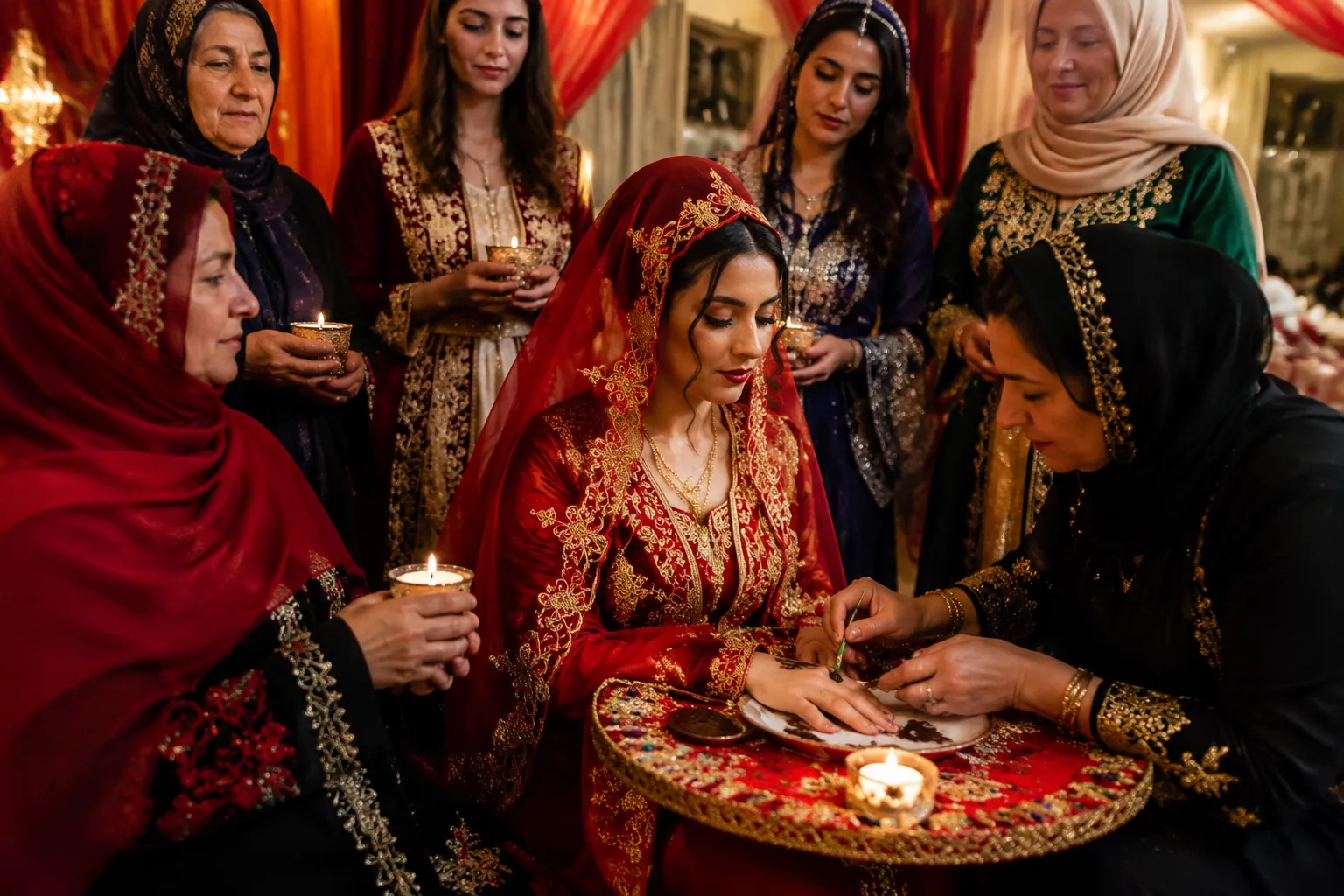
In one documented ceremony pattern, the bride leaves the dance floor and changes into a bindallı before returning for the henna application. Unmarried friends or other close companions may carry lit candles and accompany her.
The group may circle the bride before she sits in a central chair, on a platform, or in a decorated area. A home gathering may use ordinary seating, while a salon reception may plan the entrance as a choreographed stage moment.
6. The henna tray is presented
A woman carrying the henna tray may enter with another female relative, sometimes from the groom’s family. The tray can hold prepared henna and candles, but its decoration and contents vary.
The tray gives the ritual a visible center. Guests may sing, watch, or join the surrounding movement. The person carrying the tray is not necessarily the person who applies the henna, so these roles should be agreed beforehand.
7. A female relative applies the henna
A female relative from the groom’s side may apply henna to the bride’s hand. In some documented patterns, this is the groom’s mother; in others, the family chooses an aunt, sister-in-law, or another close relative.
Some families prefer a woman whose marriage is viewed positively within the family. That preference is not universal. Emotional closeness, availability, and the practical program may matter more for another family.
The bride may keep her hand closed during the ritual. In some ceremonies, a gold coin is offered to encourage her to open it. The coin, its value, its timing, and the person who receives it can differ, and some families do not include this exchange.
8. Henna is applied to the bride’s hand
The central moment is the application of henna to the bride’s hand. The amount, design, and method reflect family preference and current fashion.
Some regional customs describe henna on additional parts of the body, but those examples should not be treated as part of every modern kina gecesi. A bride may choose a simple application, a decorative design, or no henna in certain areas.
Guests generally watch while close relatives sing, carry candles, or stand around the bride. The person applying the henna should be given room to work, particularly when the design is more detailed.
9. Other guests may participate
After the bride receives henna, other guests may be invited to apply a small amount to their own hands. This is common in some gatherings, especially those where the ritual is shared among women and girls, but participation differs by family.
Guests may decline because of work, personal preference, clothing, religious practice, or other considerations. Hosts can make participation optional and provide a clear place for anyone who wishes to join.
10. The evening returns to dancing
After the henna application, the room often returns to dancing, music, food, and conversation. A kina halayı may follow, although the dance and music depend on regional and family preferences.
At a salon wedding, the next section may follow a rehearsed program. At home, the transition may be informal. Gifts, photographs, family introductions, or a takı ceremony may also appear, but these belong to the wider wedding plan rather than every henna night.
Who Is Usually Involved?
The bride
The bride is the focus of the henna ritual. She may take part in the opening entertainment, change clothes, enter with friends, sit for the application, and rejoin the celebration afterward.
Her preferences should guide personal choices such as clothing, music, henna design, guest participation, and whether the groom appears during the ceremony.
The bride’s family
The bride’s family often welcomes guests, coordinates food, and supports the practical flow of the evening. A mother or other female relative may prepare the henna and lead songs, while a venue may manage much of the event logistics.
The groom’s family
A female relative from the groom’s family may bring the henna, enter with the tray, or apply the henna to the bride’s hand. The chosen person should know where to enter, when to move forward, and what the venue expects.
Friends and guests
Friends may carry candles, circle the bride, sing, dance, and help her move between parts of the program. Other guests may watch, join the dancing, receive henna, give gifts, or take photographs.
Guests do not need to know every regional custom. Paying attention to the family’s cues is more useful than treating another wedding or online video as the correct sequence.
How the Order Can Change
Home and village gatherings
A home or village kina gecesi may involve shared cooking, neighborhood invitations, relatives arriving with trays, and an informal movement between eating, singing, dancing, and henna application. The event may take place in a courtyard, home, street, or another local setting.
Timing may also connect with other wedding activities instead of following one evening program. Regional research describes differences in songs, food, candles, household roles, and the relationship between the two families.
Salon wedding flow
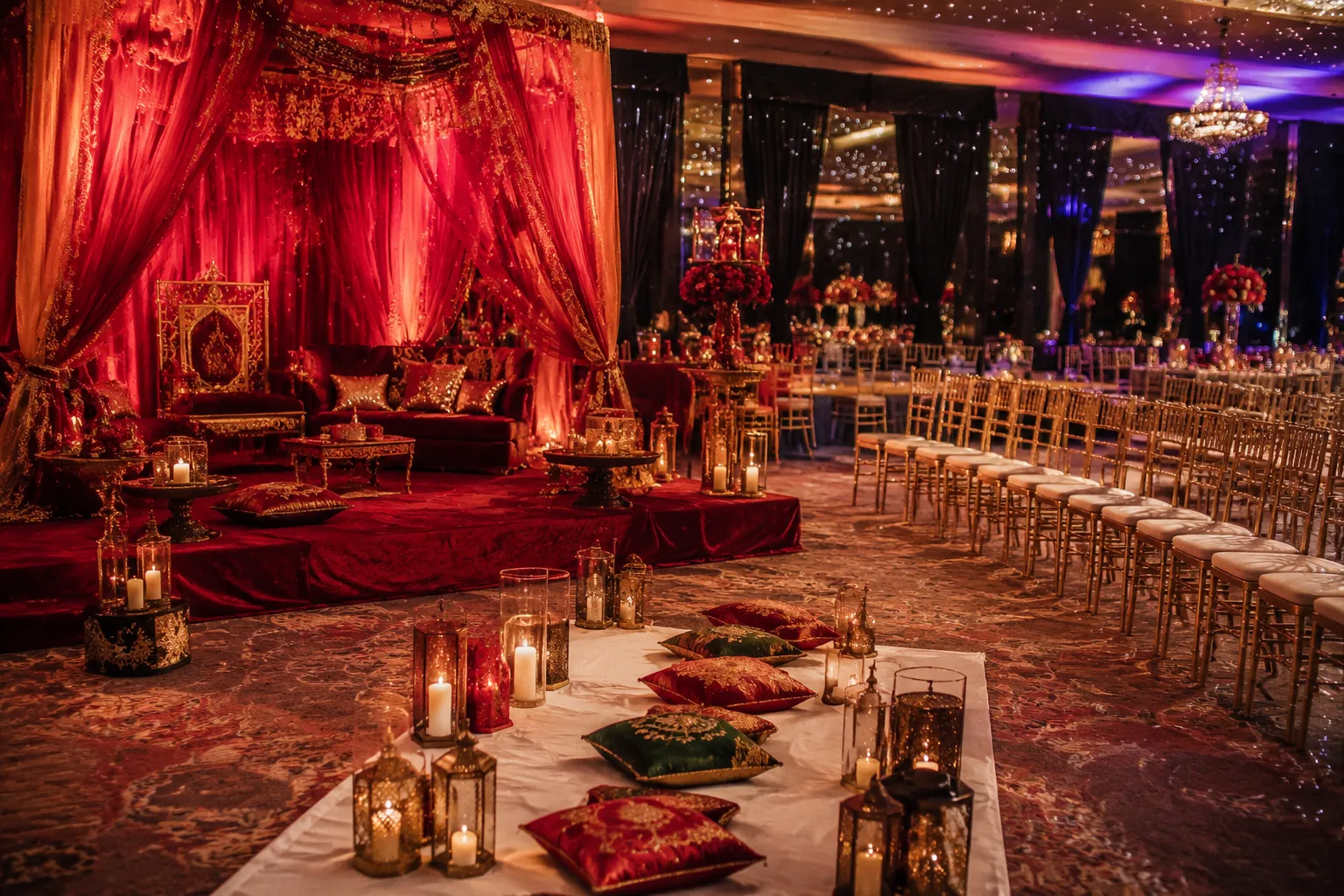
A salon reception usually gives the evening a clearer stage sequence. The bride’s entrance, costume change, candle procession, music cues, henna application, dancing, and photographs may be scheduled in advance.
Some venues include organized dancers or nedime performers who accompany the bride during staged entertainment. Their presence is a venue choice, not a requirement of the custom.
Regional and diaspora variations
A practice documented in one village or region should remain an example rather than a general rule for all Turkish weddings. The same caution applies to particular gift exchanges, prayers, ingredients, dances, clothing, and songs.
For some diaspora couples, the ceremony may be shortened, moved to a weekend, combined with another reception, or adapted to the venue’s schedule. Families may also combine practices from different regions. Explain the candle entrance, henna application, guest participation, and any takı ceremony before the event begins.
What Guests Can Expect
- Arrival, greetings, food, and informal conversation.
- Music and dancing before the henna ritual.
- A change in music, lighting, or room activity as the ritual begins.
- The bride returning in a bindallı or another chosen outfit.
- Friends or relatives carrying candles around her.
- A henna tray entering with a female relative.
- Henna being applied to the bride’s hand.
- Optional henna for other guests.
- More dancing, photographs, food, gifts, or a takı ceremony.
Not every event includes every stage. Wait for an invitation before touching the henna, entering the central area, joining a formal procession, or taking part in a gift exchange.
Questions to Confirm Beforehand
- Is this a bride-centered event or a joint celebration?
- Will the groom attend the henna ritual?
- Which songs should accompany the candle entrance?
- Who will carry the tray and apply the henna?
- Is a gold coin or another gift part of the hand-opening exchange?
- Will the bride change into a bindallı?
- Can guests receive henna, and where should they go?
- Will the event include a takı ceremony?
- Which materials, music cues, seating, lighting, and changing space does the venue provide?
- Which customs come from this family or region?
A kina gecesi commonly begins with gathering and dancing, moves into a candle-and-henna ritual centered on the bride, and then returns to music or wider wedding activities. Confirm the roles, materials, guest participation, and timing with the hosts, because a family custom may differ from a salon program or another wedding you have attended.
Sources
- 'Mother Bring the Henna': Kına Gecesi and Fragmented Imaginations of the Nation-state
- Dance and Identity Construction in Political Rhythms in Prefecture of Edirne, Turkey
- Çiçekpınar (Şarkikaraağaç-Isparta) Dügün Ritüeli
- Kültür Endüstrisi Bağlamında Evlilik Ritüelleri: Çorum Örneği
- Cultural Codes of Marriage Rituals in Anatolia: From Ritual to Word in the Context of Oral Culture
- Türkiye’de Kına Gecesi Bohça Götürme Geleneği ve Toplumsal İşlevi
- The Construction of National Identity through Cybernetic Process: The Example of “K’na” Dance Event in Greek and Turkish Thrace
- ESKİŞEHİR İLİNDE YAŞAYAN MANAVLARIN KINA GECELERİ ve TÜRKÜLERİ: KARAOĞLAN KÖYÜ ÖRNEĞİ