
Kina Gecesi Ceremony Checklist for Bride, Mother, and Helpers
A workable kina gecesi ceremony checklist starts with assignments, not shopping. The bride chooses the ceremony she wants, a family coordinator settles expectations, and named helpers manage objects, cues, and venue handoffs.
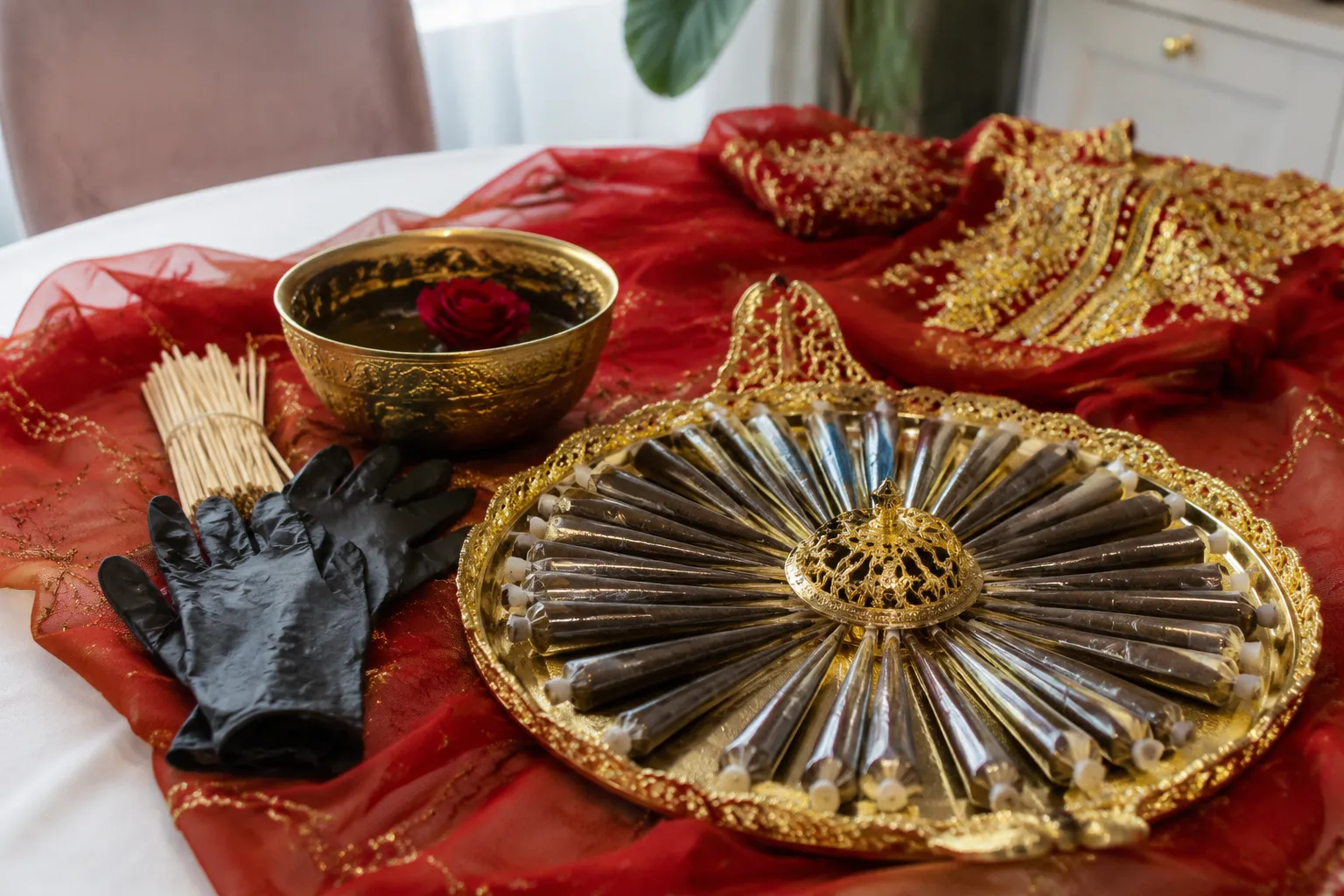
There is no single sequence shared by every Turkish family. Practices vary by region, family side, religious or secular preference, venue, and diaspora setting. A bindallı, red veil, henna tray, gold coin, gloves, and bohça are selectable elements, not compulsory supplies.
Quick Kina Gecesi Responsibility Checklist
Bride
- Choose the atmosphere: emotional, celebratory, women-centered, mixed, or a combination.
- Approve the ceremony order, entrance music, henna music, and return to dancing.
- Select the clothing and decide whether an outfit change, bindallı, or red veil is included.
- Confirm who may apply the henna and whether a closed-hand gift moment will take place.
- Choose how the henna will be applied and whether cloth or gloves will cover the hands afterward.
- Name one attendant who can pause the schedule for water, privacy, or a clothing adjustment.
- Place personal essentials and removed jewelry with a trusted helper.
Bride's Mother or Family Coordinator
The bride's mother does not have one universal ritual duty. She may coordinate the family side, or another relative may take that role when it suits the family better.
- Ask both family sides which practices they expect, prefer, or want omitted.
- Confirm who prepares, carries, presents, and applies the henna.
- Settle privately whether the groom's family has a role in the central moment.
- Agree on any coin, gift, bohça, prayer, blessing, song, or elder-led contribution.
- Identify the relatives expected near the bride and tell them when to arrive.
- Give the final decisions to the ceremony lead and venue contact.
- Keep previously settled choices from becoming public arguments during the event.
Designated Helpers
Assign each role by name. “The cousins will handle it” often leaves nobody responsible when an item needs to move.
- Ceremony lead: Keeps the agreed sequence and calls participants forward.
- Bride attendant: Assists with dressing, veiling, henna application, and hand coverings.
- Henna keeper: Controls the bowl, tray, applicator, cloths, and related supplies.
- Valuables keeper: Holds jewelry, gifts, envelopes, and the bride's personal items.
- Music contact: Gives cues to the DJ, musicians, or venue operator.
- Family caller: Finds relatives before their scheduled moments.
- Venue contact: Handles access, service, lighting, setup, and cleanup questions.
- Departure checker: Collects clothing, gifts, ceremony objects, and personal belongings.
One person can hold compatible roles at a small home gathering. For a larger event, keep the ceremony lead, bride attendant, and valuables keeper separate.
Kina Gecesi Preparation Timeline
This is an organizational timeline, not a traditional calendar. Adjust it around the venue, family schedule, and surrounding wedding events.
Several Weeks Before
- Choose the location and estimate the guest count.
- Decide whether attendance is women-centered, mixed, or divided into separate periods.
- Ask whether either family expects a particular regional or religious element.
- Select only the parts of the ceremony the bride wants.
- Name the ceremony lead and primary helpers.
- Book any venue, music, catering, photography, or clothing services being used.
- Ask the venue for a written list of what it provides and what the family brings.
Some salon packages present a staged sequence as the complete custom. Treat the package as a service offer. The family should choose the ceremony flow before accepting its script, props, or performers.
One to Two Weeks Before
- Write the ceremony order in short steps and place one name beside each step.
- Confirm the henna source, preparation, container, applicator, and backup applicator.
- Finalize clothing, shoes, veil, jewelry, music, and changeover assistance.
- Decide who holds any coin, gift, or valuable object.
- Review entrances, stairs, seating, changing space, and known access needs.
- Choose secure locations for gifts, clothing, and personal belongings.
Two or Three Days Before
- Place ceremony supplies together in one labeled container.
- Keep clothing and accessories in a separate garment bag.
- Check that the bowl sits securely on the selected tray.
- Confirm venue rules for candles, effects, decorations, and outside food.
- Pack tissues, water, hairpins, fasteners, hand coverings, and a small sewing kit.
- Share the final role sheet and reconfirm arrival times.
On the Day
- Check that every ceremony object and clothing item has arrived.
- Place jewelry, coins, and gifts directly with the valuables keeper.
- Test the entrance, henna, and transition music cues.
- Confirm where the application will happen and who stands nearby.
- Keep food and drinks away from the ceremony supplies.
- Tell the venue when service should pause and where used materials will go.
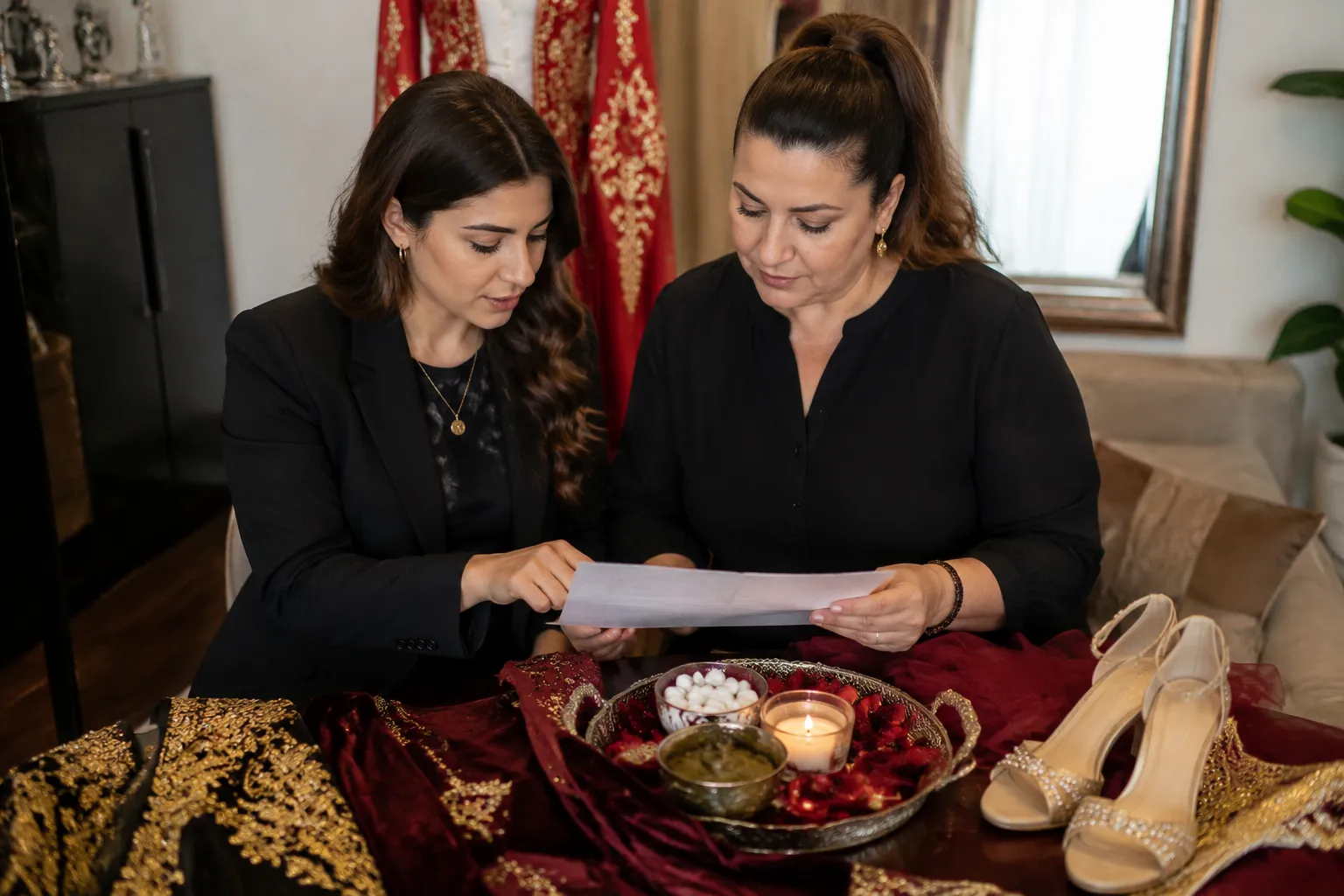
Supplies Chosen for This Ceremony
An item belongs on the list only when it supports an agreed part of the event. This avoids buying a full commercial set for a simpler family plan.
Core Practical Supplies
- Prepared henna, a suitable bowl, and the selected application utensil
- A stable tray if the plan includes a tray presentation
- A protective surface covering, cloths, tissues, and a waste container
- Hand coverings or wrapping if the bride has chosen them
- Water for the bride and active helpers
- The ceremony order and contact details for the venue and service providers
Cultural research records different forms of henna presentation and application. It does not establish one preparation formula or applicator for every family. Confirm the materials with the person preparing and applying the henna.
Optional Items
- Bindallı or another ceremony outfit
- Red veil or another family-selected head covering
- Decorated tray, permitted candles, or non-flame decorations
- Red gloves, cloth, or a handkerchief for covering the hands
- Gold coin or another agreed gift
- Bohça or another family gift container
- Guest keepsakes or separate henna portions
A bohça is optional. Documented gift-transfer practices differ in contents, timing, direction, and regional name. Ask both families whether an exchange belongs at this henna night before preparing one.
A Flexible Ceremony Sequence
Guest arrival: Guests greet the families and move into dancing, refreshments, or a quieter opening period. The guest-flow helper keeps the central path clear.
Bride's preparation: The attendant checks clothing, veil placement, movement, and comfort. Jewelry that could interfere with the application goes directly to the valuables keeper.
Bride's entrance: The ceremony lead gathers participants before starting the music. Some families use a formal procession; others bring the bride directly into the gathering.
Songs or a family-led moment: Collective singing and emotional songs appear in many documented settings, but the mood and repertoire vary. Coordinate any prayer, blessing, or spoken contribution with the music contact.
Henna tray handoff: The henna keeper gives the tray to its named carrier shortly before presentation. The carrier should know where to stand and where to return it.
Closed-hand gift moment, if selected: In one documented form, the bride keeps her palm closed until a relative from the groom's family offers a gold coin. Families may use another gift, simplify the exchange, or omit it. Settle the choice privately rather than negotiating before guests.
Henna application: The named applicator comes forward on cue. Expectations about who performs this role differ between communities. Ask the family privately, avoid turning localized exclusions into a general rule, and confirm that the bride accepts the choice.
Hand covering: Some families use cloth, a handkerchief, or gloves; others omit this step. Confirm whether photographs are wanted before or after the hands are covered.
Return to the celebration: The music contact starts the agreed transition. If guests can receive henna, use separate supplies and assign someone outside the central ceremony team to supervise them.
Collection: Before departure, gather personal items, clothing, family-owned objects, gifts, unused supplies, and anything stored in changing rooms.
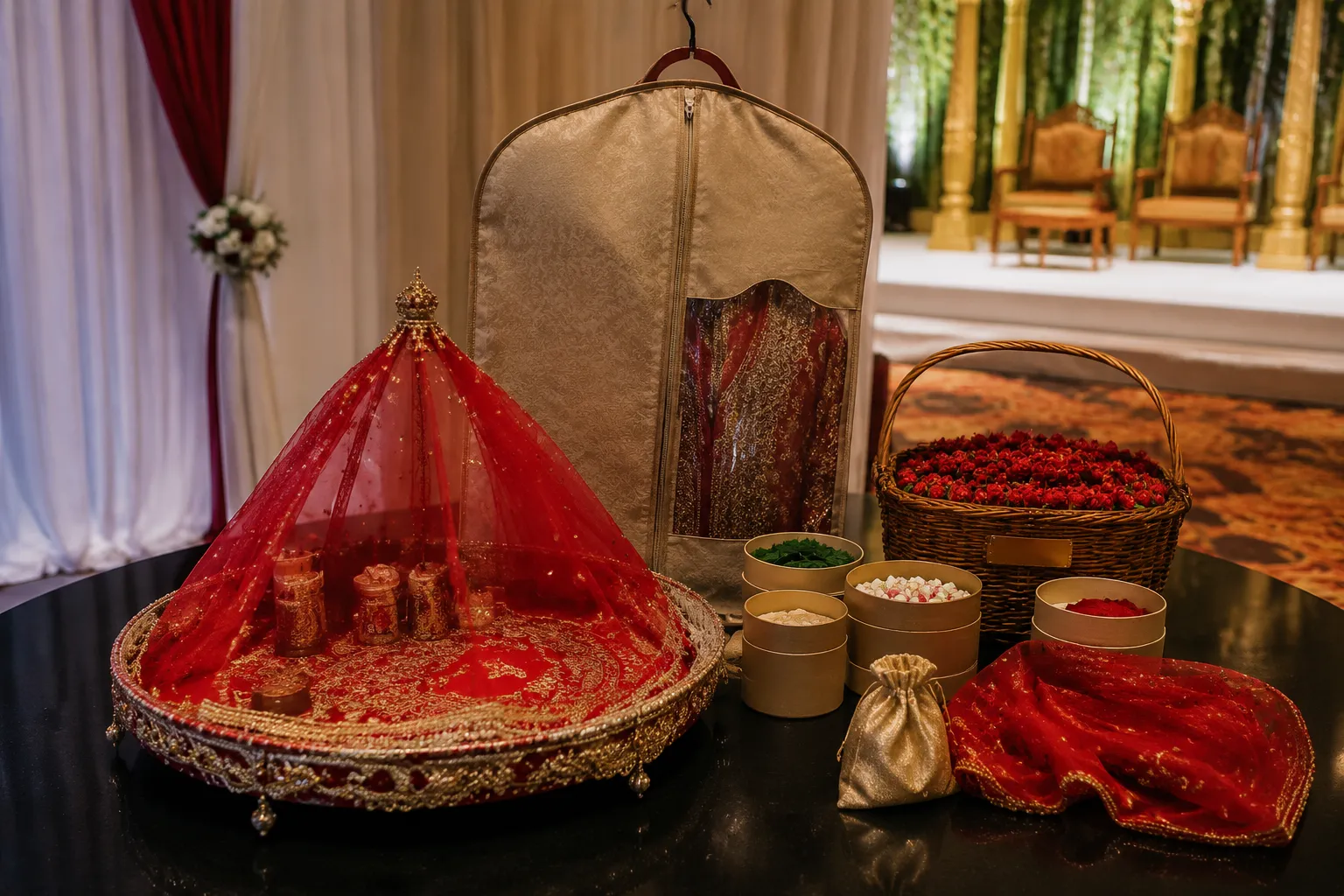
Ceremony Handoffs to Confirm
| Item or Cue | Before | During | After |
|---|---|---|---|
| Henna bowl | Henna keeper | Applicator | Henna keeper |
| Decorated tray | Henna keeper | Named carrier | Henna keeper |
| Coin or gift | Valuables keeper | Named family participant | Valuables keeper |
| Veil or hand covering | Bride attendant | Bride attendant | Bride attendant |
| Music cue | Music contact | DJ, musicians, or operator | Music contact confirms transition |
| Bohça, if included | Named family representative | Agreed recipient | Named family representative |
| Jewelry and envelopes | Valuables keeper | Designated recipient | Secured for departure |
Record an actual name for each handoff. Use the same method for clothing changes, speeches, photography cues, decorations, and guest favors.
Kina Gecesi Venue Checklist
Venue packages describe services, not cultural rules. Confirm what the venue physically provides and who controls each part of the event.
- When can helpers enter, and is there a private changing area?
- Where will clothing, valuables, gifts, and personal bags be stored?
- Can close relatives see the application without blocking the working area?
- Are entrances, toilets, stairs, lifts, and seating suitable for known guest needs?
- Who receives music cues, and when will sound and lighting be tested?
- Will food service pause during the central moment?
- Are outside food, decorations, candles, or effects permitted?
- Who removes used materials and collects family-owned objects?
- Does the booking include cleanup, and is there a removal deadline?
Photograph family-owned trays, textiles, and decorations when several providers use similar objects. Setup being included does not necessarily mean collection or cleanup is included.
Family Questions to Settle Privately
- Who is invited, and is attendance women-centered, mixed, or divided by time?
- Does the groom attend, and at what point?
- Who brings, prepares, presents, and applies the henna?
- Does the groom's family expect a role?
- Will there be a closed-hand gift exchange, and what has been agreed?
- Are a bindallı, veil, prayer, blessing, special song, or bohça included?
- Can guests receive henna?
- Which moments may be photographed or recorded?
- Which practices would make the bride uncomfortable and should be omitted?
Discuss sensitive choices with the people directly involved. Surprise assignments, public corrections, and jokes about personal circumstances can turn a brief ritual moment into a family conflict.
Regional and Diaspora Variations
Field research describes home gatherings, gardens, halls, restaurants, women-centered celebrations, mixed participation, and events fitted into longer wedding schedules. Nearby communities may still use different songs, participants, objects, and sequences.
Regional examples are reference points, not national instructions. For diaspora families, the working plan may also account for venue conventions, multilingual announcements, travel schedules, noise limits, clothing choices, and mixed guest expectations.
Write every adaptation into the role sheet. Different generations and family sides may use the same ceremony name while imagining a different event.
Final Pre-Ceremony Check
- The bride has approved the sequence and selected family practices.
- Every active role and important object belongs to a named person.
- The henna, bowl, tray, application supplies, and optional coverings are present.
- The applicator knows when and where to come forward.
- Any coin, gift, jewelry, or envelope is with the valuables keeper.
- Clothing, backup items, and music cues are ready.
- The venue knows when service pauses and who handles cleanup.
- Relatives know where to stand, sit, or enter.
- Photography expectations and access needs have been communicated.
- No unresolved family decision is being left for the public moment.
A useful checklist does not depend on including the greatest number of customs. It depends on the bride, family coordinator, helpers, and venue sharing the same plan.
Confirm what this family wants retained, adapted, or omitted. Then assign every object, cue, and handoff before guests arrive.
Sources
- 'Mother Bring the Henna': Kına Gecesi and Fragmented Imaginations of the Nation-state
- ÇANKIRI'NIN KIZILIRMAK İLÇESİNDE “KINA GECESİ” VE “GELİN ALMA”GELENEĞİ ÜZERİNE
- Türkiye’de Kına Gecesi Bohça Götürme Geleneği ve Toplumsal İşlevi
- AZERBAYCAN VE ANADOLU KINA GECESİ
- Kültür Endüstrisi Bağlamında Evlilik Ritüelleri: Çorum Örneği
- Cultural Codes of Marriage Rituals in Anatolia: From Ritual to Word in the Context of Oral Culture
- ESKİŞEHİR İLİNDE YAŞAYAN MANAVLARIN KINA GECELERİ ve TÜRKÜLERİ: KARAOĞLAN KÖYÜ ÖRNEĞİ