
How to Explain Kina Gecesi Traditions to Non-Turkish Guests
The clearest way to explain kina gecesi to guests is to describe your family’s event, not a supposedly universal Turkish format. Introduce it as a wedding-related henna night, often combining music and dancing with a quieter henna moment.
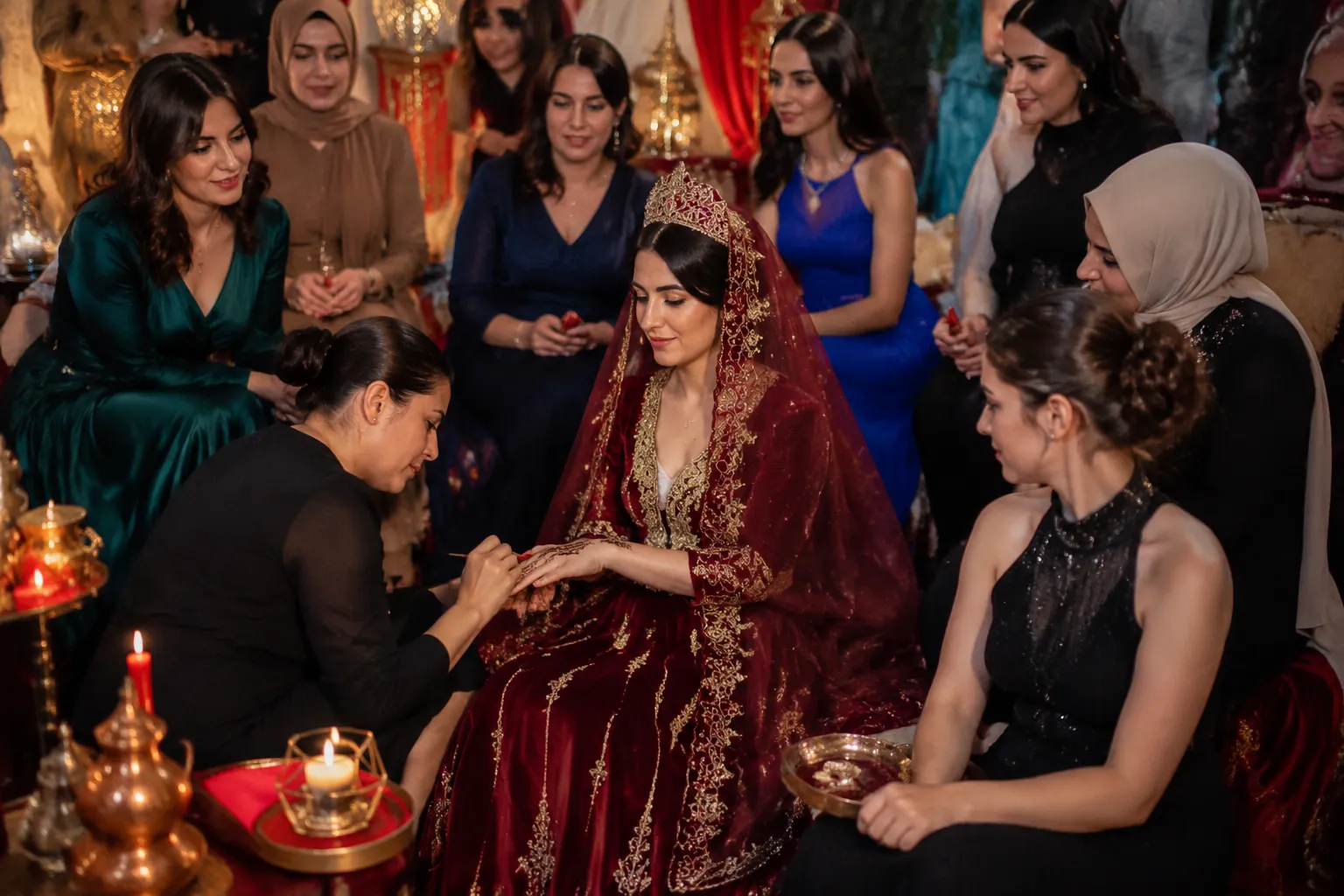
Then give guests the information they can act on: who is invited, what to wear, what they may see, and whether participation is optional. Mention any prayers, gift exchanges, photography limits, or family-specific gestures before the event.
Kina gecesi is our henna-night celebration before the wedding. Our evening will include music and dancing, followed by a short henna ceremony for the bride. Guests may be invited to dance or receive a small amount of henna, but participation is optional. This describes our celebration; other families may plan the night differently.
Adjust that wording to match the actual ceremony flow. If the gathering is women-only, mixed-gender, multilingual, or limited to close relatives, say so directly.
Explain What the Night Means to Your Family
Kina gecesi translates as “henna night,” but the literal meaning does not explain the atmosphere. In many families, the gathering centers on the bride and the application of henna. Music, dancing, clothing, songs, food, gifts, or symbolic gestures may surround that moment.
The emotional tone also varies. Some families emphasize celebration and friendship. Others preserve a farewell theme connected with family ties, change, and the bride’s transition into married life. Documented regional song traditions sometimes express sadness or separation even when the wider evening is lively.
Tell guests which meaning fits your event. If your family treats the night mainly as a party, say that. Guests do not need to imitate an emotion or attach symbolism that the hosts do not share.
Describe the Expected Kina Gecesi Flow
A short sequence is more useful than a long cultural history. Give the order planned for this event without presenting it as a national script.
- Arrival and social time. Guests greet the families, find their places, and may receive food or refreshments.
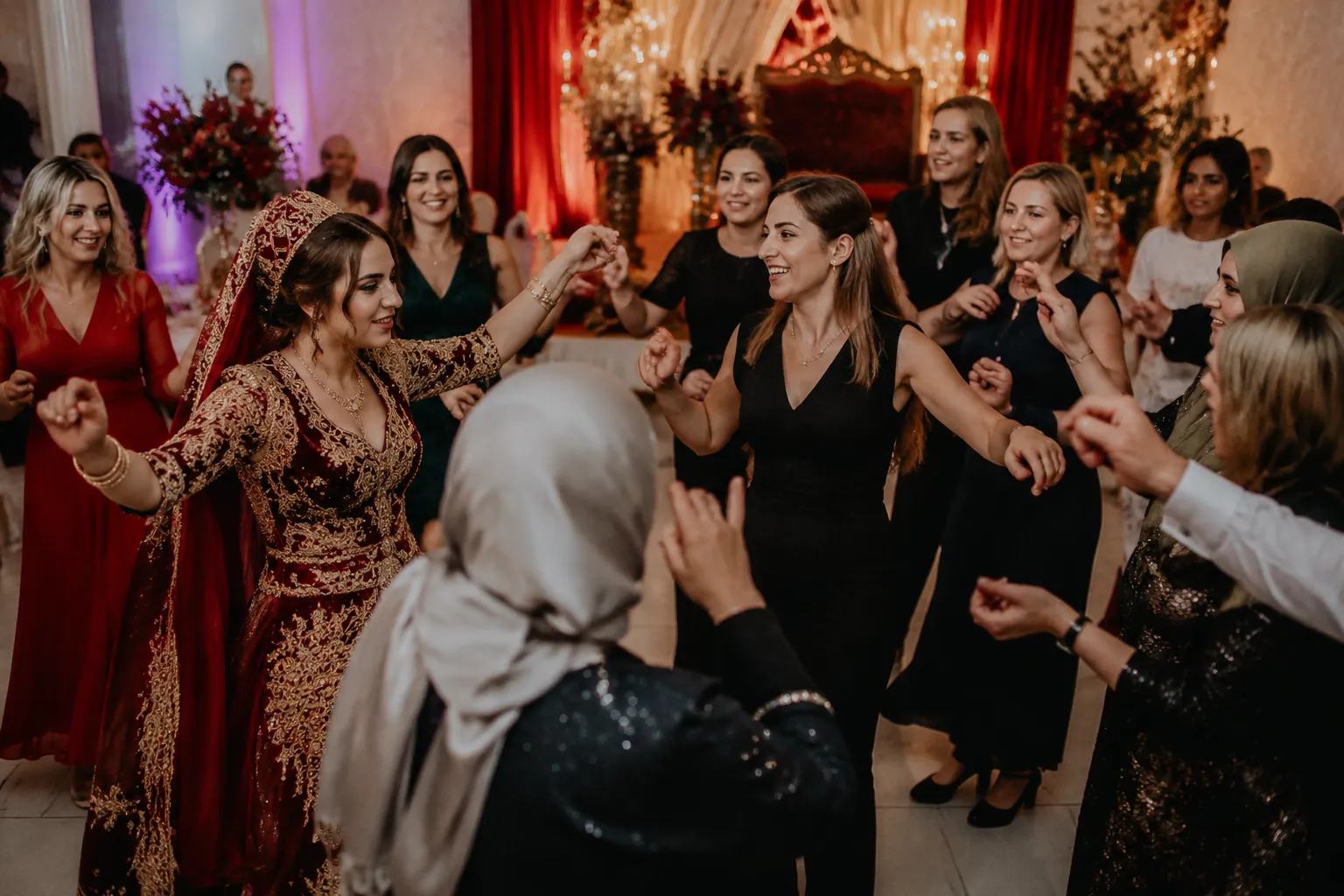
- Music and dancing. Entertainment may open the evening or continue between other parts of the program.
- The bride’s entrance or clothing change. She may wear a bindallı, an evening dress, or more than one outfit.
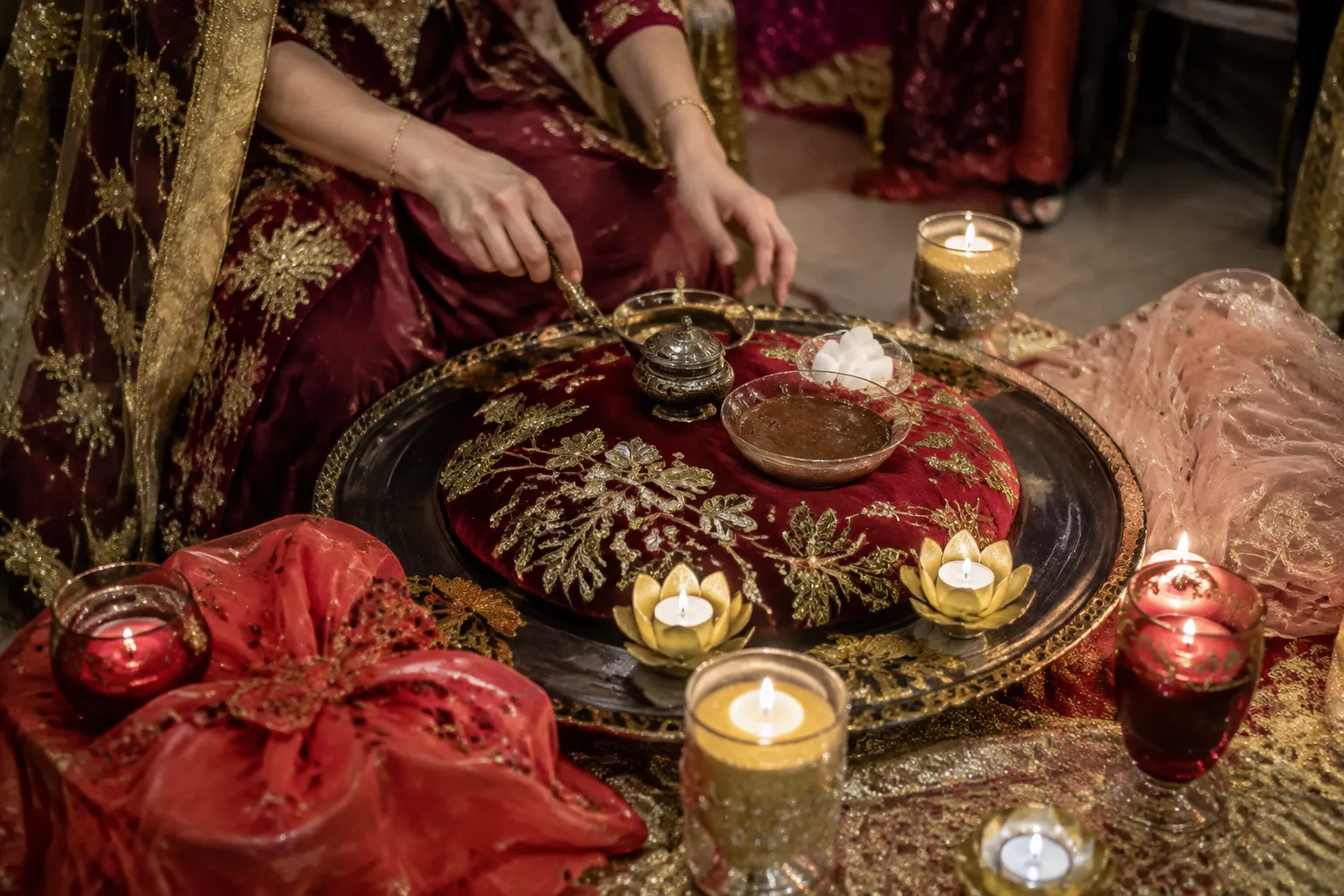
- The focused henna moment. Particular songs, subdued lighting, or a decorated tray may signal a change in mood.
- Henna application. A relative may place henna in the bride’s palm while other guests watch.
- Optional guest participation. Guests may be offered henna, invited to dance, or asked to remain seated during a family moment.
- Continued celebration. Dancing, photographs, food, or planned entertainment may follow.
Not every evening contains these stages, and the order can change. A short venue program may differ considerably from a gathering at home, a salon reception, or a regional wedding with additional family practices.
Tell Guests Who Has a Role
Participant roles often follow family relationships, but they are not fixed across Turkish weddings. Guests may encounter:
- The bride, usually the central participant during the henna moment.
- The bride’s mother or close relatives, who may welcome guests, accompany the bride, or carry ceremonial items.
- A relative from the groom’s family, who may be invited to apply the henna.
- Friends and younger relatives, who may join an entrance, carry a tray, or lead dancing.
- The groom, who may attend all, part, or none of the program.
- Other male guests, depending on whether the gathering is women-only, mixed-gender, or divided into separate portions.
- A musician, presenter, or venue coordinator, particularly during a structured salon event.
If someone has a ceremonial role, explain it plainly:
During the henna moment, the groom’s mother will place henna in the bride’s palm. Guests can watch, and no action is expected from them at that point.
This prevents visitors from wondering whether they should approach, offer money, take photographs, or join the immediate family.
Explain the Closed-Hand and Coin Gesture Only If It Is Planned
Some documented versions include a playful exchange in which the bride initially keeps her hand closed. A coin or gold piece may then be offered before she opens her palm for the henna.
This gesture does not appear at every henna night, and families may stage or interpret it differently. A guest-facing explanation could say:
The bride may keep her hand closed briefly before accepting the henna. In our family, this is a playful exchange with the groom’s side, not a request for guests to contribute money.
If guests have a separate gift-giving role, provide clear instructions. They should not have to infer an obligation from a visible coin, tray, or piece of jewelry.
Make Guest Participation Invitation-Led
Non-Turkish guests may be eager to participate but unsure whether declining would cause offense. Remove that uncertainty before the event.
Depending on the family’s plan, guests might be invited to:
- Join a group or line dance.
- Walk with the bride during an entrance.
- Carry or accompany a decorated tray.
- Clap or sing during a familiar song.
- Receive a small amount of henna.
- Wear a provided scarf, veil, sash, or themed accessory.
- Join photographs after the central henna moment.
- Watch quietly while relatives complete the ritual.
State what is optional: “You are welcome to join the dancing and receive henna when it is offered, but either choice is optional.” Guests who decline henna do not need to provide a lengthy explanation.
Guests should also wait for an invitation before handling henna, clothing, trays, or other ceremonial objects.
Give Guests Five Practical Etiquette Notes
Confirm the Dress Expectation
An event at home may feel different from one held at a hotel, supper club, or wedding salon. Tell guests whether the dress is formal, festive, modest, themed, or simply comfortable for dancing.
Guests do not need Turkish ceremonial clothing unless the hosts request or provide it. The bride wearing a bindallı does not create a dress requirement for everyone else.
Clarify Who Is Invited
Do not assume the gathering is women-only or mixed-gender. Both arrangements exist, along with programs where men attend only one portion. The invitation should also clarify whether partners and children are included.
Prepare Guests for a Change in Mood
Conversation and movement may settle when the henna tray arrives or particular songs begin. Guests can lower their voices, remain attentive, and wait for a cue before approaching the bride.
Tears do not necessarily mean something has gone wrong. In some families, songs acknowledge separation and change. Elsewhere, the same part of the evening may be brief or playful.
Set Photography Expectations
General event photography may be welcome while close images of the henna application remain reserved for family or a photographer. Guests should also ask before posting images of the bride, children, prayers, or private family moments.
Separate Visible Gifts from Guest Obligations
Some celebrations include gifts, jewelry, coins, or decorated trays. Their presence does not establish one rule for every attendee. Tell guests directly if a gift custom applies to this evening.
Account for Family, Regional, and Diaspora Variation
Research on regional, urban, and diaspora weddings describes considerable variation in songs, clothing, assigned roles, guest lists, venues, and timing. Some diaspora couples retain a henna tray, particular music, or a bindallı while adapting the language, program length, entertainment, or gender mix.
Localized studies can document a practice without establishing it as common across Turkey. Television scenes are also unreliable planning models. They show a produced representation, often with elaborate staging, rather than a standard ceremony flow.
A short message from the hosts will prepare guests better than a video from an unrelated celebration.
A Message to Send Non-Turkish Guests
We are holding a kina gecesi, or Turkish henna night, as part of our wedding celebrations. The evening will begin with music, dancing, and refreshments. Later, the atmosphere will become quieter for a short ceremony in which a close relative applies henna to the bride’s palm.
Guests may then be invited to receive a small amount of henna and join the dancing. Both are optional. Our event will be mixed-gender, and festive evening clothing is suitable. Please follow the family’s cues during the ceremony and ask before posting close photographs.
Kina gecesi customs vary among families and regions. This message describes what we have planned for our celebration.
Replace the attendance and clothing sentences with your actual arrangements. Add one clear sentence if the evening includes prayers, a gift exchange, themed clothing, or the closed-hand gesture.
Questions to Settle Before Sending the Invitation
- Where will the event take place, and how formal will it be?
- Is attendance women-only, mixed-gender, or divided by program segment?
- Will the groom attend?
- What is the expected ceremony flow?
- Who will apply the bride’s henna?
- Will the closed-hand and coin gesture be included?
- Will guests be offered henna?
- Which forms of participation are optional?
- Will the program include prayers or blessings?
- Is there a gift-giving moment?
- What are the photography and social-posting preferences?
- Will explanations be available in more than one language?
- Who can answer guest questions during the event?
These answers form the useful guest guide. Scholarship helps explain recognizable elements and variation, but it does not provide one contemporary national format for international guests.
Before sending the explanation, confirm the sequence, roles, dress expectation, participation options, and photography rules with the couple and the relatives coordinating the henna moment.
Sources
- Consuming Ritual: Reframing the Turkish Henna-Night Ceremony
- 'Mother Bring the Henna': Kına Gecesi and Fragmented Imaginations of the Nation-state
- Home Beyond Borders: Turkish Wedding Ceremonies as the Embodied Extension of Diasporic Space in German-Turkish Context
- Türkiye’de Kına Gecesi Bohça Götürme Geleneği ve Toplumsal İşlevi
- AZERBAYCAN VE ANADOLU KINA GECESİ
- ESKİŞEHİR İLİNDE YAŞAYAN MANAVLARIN KINA GECELERİ ve TÜRKÜLERİ: KARAOĞLAN KÖYÜ ÖRNEĞİ
- Yerli Dizilerde Geçiş Ritüelleri: Kına Gecesi Örneği
- KINA TÜRKÜLERI ÜZERINE