
DIY Kina Gecesi Decorations vs Rental Package
When the henna-night plan reaches the decoration stage, the real choice is usually about workload. Compare who can source, transport, set up, clear, and store the items before choosing between DIY kina gecesi decorations and a rental package.
DIY offers closer control over colours, fabrics, trays, candles, seating details, and family-made touches. A rental package may reduce separate sourcing, but its usefulness depends on the exact inclusions, venue access, and responsibilities left with the couple or family.
No direct, current comparison establishes that either option is universally cheaper, easier, more culturally suitable, or better for Turkish weddings. Treat the decision as an event-specific planning choice.

Start With the Ceremony Flow
Kına gecesi is often part of a wider wedding sequence, but the format can change by family, region, religious or secular preference, venue, and diaspora setting. The celebration may take place at home, in a garden, at a village wedding, in a salon, or in a venue arranged through an event company.
Research on kına gecesi describes materials such as a henna tray, candles, red coverings or scarves, seating for the bride, serving arrangements, food, music, and guest participation. These are documented examples rather than a fixed decoration list for every celebration.
Before selecting a style, ask where the bride will sit, how the tray will be carried, where guests will gather, and whether dancing requires open space. A visually appealing arrangement can still create problems if it blocks movement or leaves too little room for the ceremony.
When DIY May Fit
DIY kina gecesi decorations may suit a family with a clear design idea, dependable helpers, and somewhere to prepare and store the items. The venue also needs to permit outside decorations and provide enough access time for assembly.
The main advantage is control. The family can select individual colours, fabrics, candle holders, trays, table details, signs, and other personal pieces instead of working from a preset combination. This can also keep culturally important ceremony materials visible while treating additional room styling as optional.
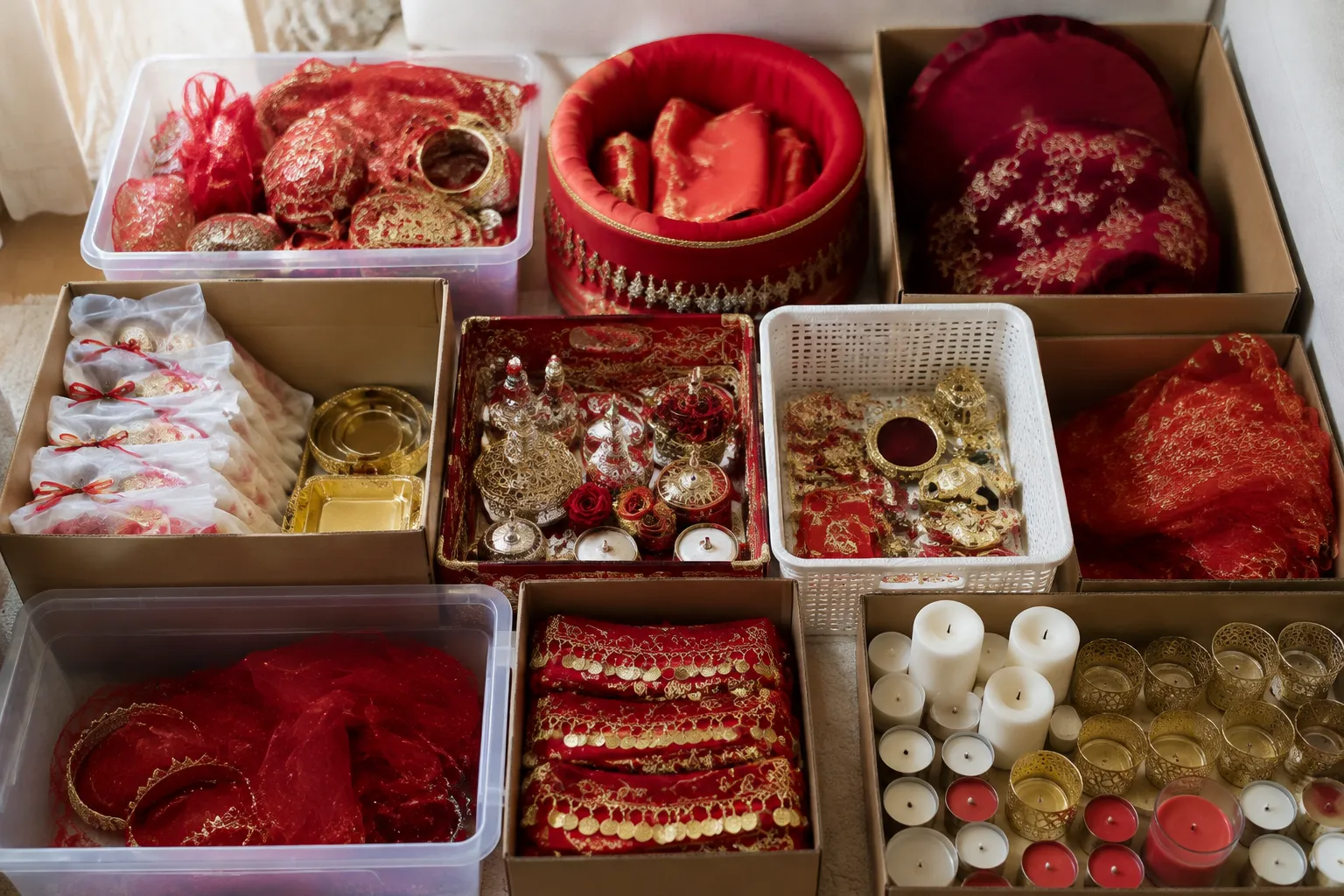
DIY decoration effort includes more than making or buying objects. The work can involve messages, shopping, collection, sorting, loading, venue coordination, setup, teardown, and storage.
- List the ceremony materials and optional decorative items.
- Confirm the colour, fabric, seating, and table arrangement.
- Source or make each item, then check its size, quantity, and condition.
- Assign transport and setup roles around the venue access window.
- Plan packing, reuse, return, disposal, and storage after the event.
If relatives are helping, agree on specific tasks and arrival times. Someone attending the public moment may not be available to manage boxes, candles, furniture, or teardown at the same time.
When a Rental Package May Fit
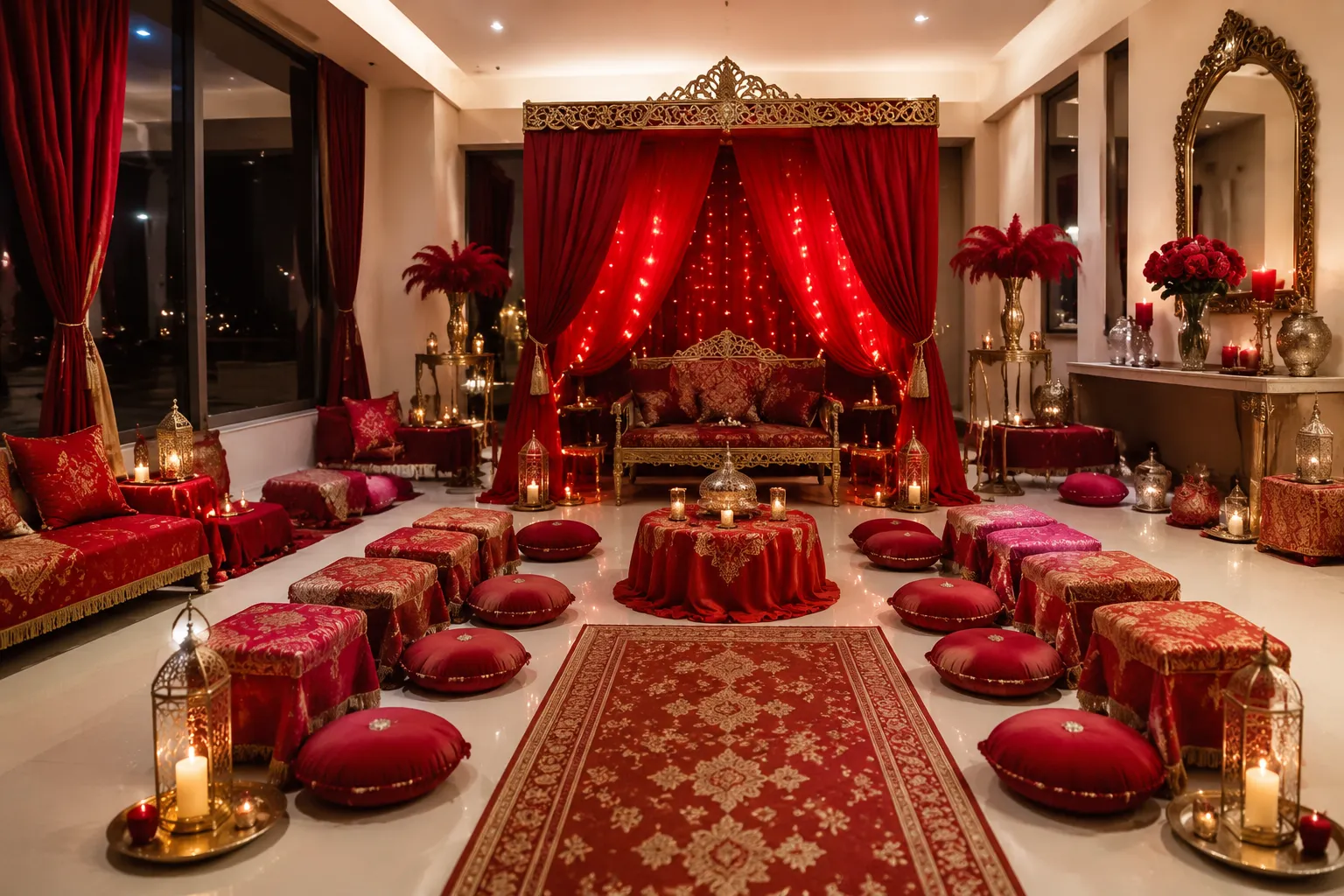
A kina gecesi rental package may fit when the couple wants fewer separate sourcing tasks, the venue allows only a short setup window, or one person can coordinate with the supplier. It may also suit a salon reception where the entrance, seating, backdrop, and ceremony area need to be arranged in sequence.
In some Turkish urban wedding settings, providers present bundled services involving decoration, food, entertainment, photography, venue organization, or kına-related items. A package description does not establish that its contents are standard, culturally preferred, higher quality, or better value.
Read the package as a list of deliverables. Ask whether it covers only decorative objects or also includes delivery, unloading, installation, tables, chairs, fabric treatment, candles, henna materials, lighting, attendants, cleanup, and collection. Services may be presented together while remaining separate in the price or responsibility allocation.
Ask what happens if the couple changes the colour, removes an item, adds a guest area, or chooses another ceremony arrangement. A single point of contact can simplify coordination, but it does not automatically transfer every task away from the family.
DIY and Rental Compared by Workload
| Planning point | DIY decorations | Rental package |
|---|---|---|
| Customization | Individual items can be selected, made, or adjusted. | Changes depend on the supplier’s inventory, design process, and quotation. |
| Sourcing | The couple or family finds each item and confirms quantities. | The supplier may gather listed items, but inclusions need confirmation. |
| Transport | Someone needs to collect, load, protect, and deliver the items. | Delivery may be included, excluded, or assigned to another party. |
| Setup | Family, friends, venue staff, or a decorator may assemble everything. | Supplier staff may install some elements, but the scope should be recorded. |
| Teardown | The family may need to pack and remove the decorations. | Collection may be included, scheduled separately, or left to the client. |
| Storage | Purchased items remain with the couple or family after the celebration. | Rented items usually return to the supplier under the agreed arrangement. |
| Responsibility | More tasks stay within the family’s planning group. | More tasks may be coordinated externally, but responsibility is not automatically transferred. |
| Cost factors | Materials, tools, labour, transport, and possible reuse all affect the total. | Package scope, delivery, setup, collection, changes, deposits, and other terms affect the total. |
This comparison identifies planning variables rather than typical market outcomes. Available material does not establish representative Turkish prices, labour hours, standard package contents, setup windows, or cancellation terms.
Customization and Coordination
DIY decoration effort tends to increase when the design uses many small pieces or requires precise placement. A family may enjoy that preparation, but one person still needs to confirm quantities, timing, and venue access.
Rental services may make a coordinated look easier to discuss, especially when a supplier presents a complete concept. A concept image, however, does not describe everything that will arrive. Ask for the materials, dimensions, colours, furniture, lighting, and ceremony elements included in the quoted arrangement.
For a family-centred celebration, discuss which elements belong in the room. Some families may prioritise the henna tray, red covering, candles, seating, and songs, while others may prefer a modern salon arrangement. Neither approach represents every Turkish or Turkish-diaspora wedding.
Check the Venue Before Buying or Booking
Venue fit considerations come before decoration style. A home, garden, village setting, and salon may create different limits for access, movement, storage, and installation.
- Where will the bride sit during the henna portion?
- Is there space for the procession, tray, candles, dancing, and guest movement?
- When may the decorating team enter?
- Can an outside supplier work in the room?
- Who provides tables, chairs, backdrops, power, and lighting?
- Are candles, open flames, hanging fabrics, adhesives, or freestanding structures restricted?
- Who protects the floor, walls, furniture, and venue equipment?
- Who removes the materials before the access period ends?
- Where may boxes and unused items remain during the event?
These details are venue-specific. Ask the venue in advance, and do not treat a decoration image or package description as evidence that a particular installation is permitted.
Assign the Work Clearly
A short responsibility sheet can prevent confusion. Name one person for each task and record when it happens.
For DIY, allocate sourcing, item checks, transport, setup, ceremony materials, guest-area details, packing, and storage. For a rental package, record whether the supplier, venue, or family handles delivery, unloading, styling, furniture movement, last-minute adjustments, candle or henna placement, damage reporting, collection, and return timing.
“Decoration included” does not necessarily include installation, teardown, transport, or ceremony assistance. Ask the supplier to separate each service in the written quotation or booking record.
Questions Before Choosing
DIY Questions
- Who makes the final design decisions?
- Who buys or prepares the henna-night materials?
- Where will the items be stored before the event?
- Who has a suitable vehicle for transport?
- How long will setup take within the venue’s access rules?
- Who can stay for teardown?
- Which items can be reused after the celebration?
- What happens if an item breaks, goes missing, or does not fit the venue?
- Does the family want decoration work to be part of the preparation day?
The material budget is only one part of the calculation. DIY can create family participation, but it can also place many invisible tasks on a small group.
Rental Package Questions
- What exactly is included in the package?
- Which items are rented, and which items remain with the couple?
- Does the quotation include delivery, setup, teardown, and collection?
- What are the installation and collection times?
- Who supplies the henna, tray, candles, scarves, coverings, and seating?
- Can the design be adjusted for family preferences?
- Are colour, size, quantity, and material details recorded?
- What happens if the venue changes the available layout?
- Are deposits, balances, cancellation terms, or damage charges part of the agreement?
- Which responsibilities remain with the couple or family?
Package-oriented research can help identify questions about coordination and responsibility, but it does not establish a standard Turkish rental contract. Confirm the terms for the specific provider and event.
A Practical Decision Rule
DIY may fit when the group has enough time, storage, transport, and dependable setup help, and when individual customization matters more than reducing coordination.
A rental package may fit when the venue schedule is tight, the decoration is difficult to move or assemble, or the group prefers one coordinated contact. Confirm the package boundaries before treating that convenience as part of the arrangement.
A mixed approach can also work. The family might prepare selected ceremony materials while a supplier or venue team handles larger room elements. This preserves personal choices without assigning every transport and setup task to relatives.
Limits of the Comparison
The available material supports qualified cultural context, examples of kına gecesi materials, and documented differences between family or neighbourhood preparation and salon or event-company organization in particular settings. It does not provide a direct comparison test between DIY and rental.
There is no sound basis here for typical prices, average labour hours, standard package contents, setup times, venue permissions, transport arrangements, storage requirements, deposits, cancellation obligations, or damage liability. Those details belong to the specific event, venue, and supplier.
Compare the full workload, not only the visible decoration price. Put each responsibility beside a named person, confirm the venue conditions, and ask the supplier to define every included service before finalising the kina gecesi plan.
Sources
- 'Mother Bring the Henna': Kına Gecesi and Fragmented Imaginations of the Nation-state
- KINA GECESİ RİTÜELİNDE ANLAMSAL İŞLEYİŞ: ÇAĞRIŞIMLAR, DÜŞÜNYAPILAR, DÖNÜŞÜMLER
- Kınanın Gizli Özneleri: Sağlık Söylemleri Altında Yatan Duyuların Belleği
- Kültür Endüstrisi Bağlamında Evlilik Ritüelleri: Çorum Örneği
- A Tradition that Has Become Unified: Practices Related to Getting Married in Urban Environment
- Sistem Informasi E-Marketplace Penyewaan Dekorasi Berbasis Web